English
 Spanish
 French
 Arabic
Electric Pole Accessories
- Home
- Products
- Pole Line Bolt
- CW-PTEB: Pigtail Bolts
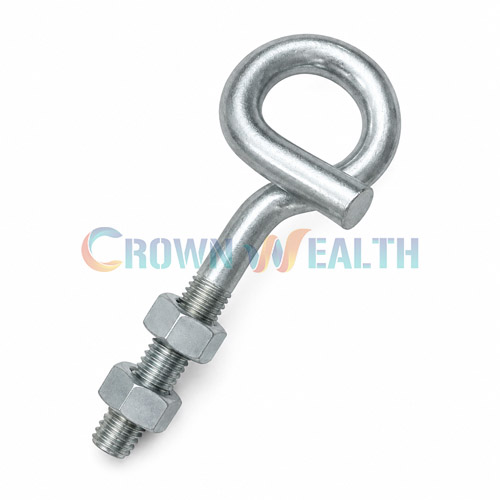
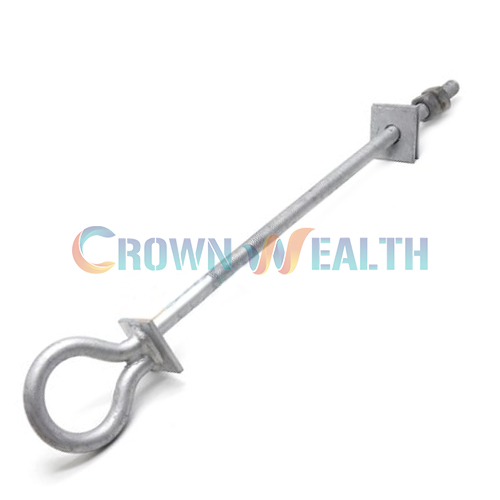
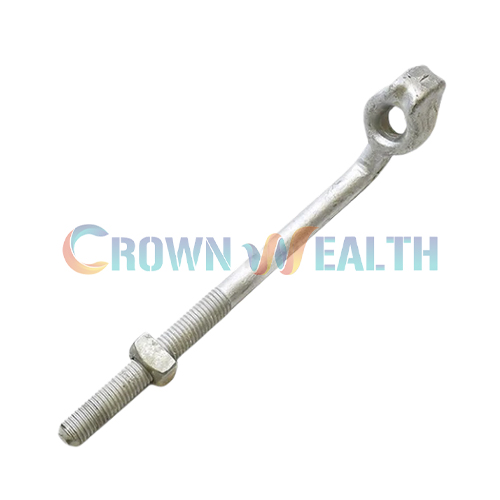
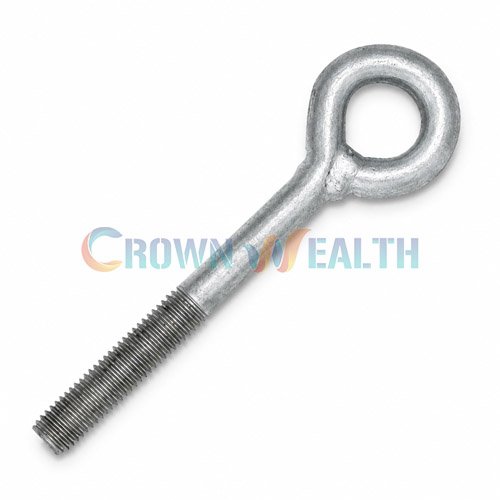
The Pigtail Bolt is a hot-dip galvanized pole line fitting designed to connect dead-end clamps, suspension clamps, and other aerial cable hardware to wooden, concrete, or compatible utility poles.
Hbcrownwealth manufactures pigtail bolts from steel rod and forms the spiral hook end for secure attachment of overhead line fittings. The complete assembly can include nuts and washers for efficient field installation.
Product: Pigtail Bolt
Part No.: CW-PTEB
Material: Steel
Finish: Hot-Dip Galvanized
Galvanizing: ASTM A153
Available Rod Diameters: 1/2″, 5/8″, 3/4″
Application: Dead-end clamps, suspension clamps, telecom and power line hardware
Pole Type: Wooden poles, concrete poles and other suitable utility poles
OEM/ODM: Custom rod diameter, length, thread, hook dimensions and packaging available
The Pigtail Bolt is a hot-dip galvanized pole line fitting designed to connect dead-end clamps, suspension clamps, and other aerial cable hardware to wooden, concrete, or compatible utility poles.
Hbcrownwealth manufactures pigtail bolts from steel rod and forms the spiral hook end for secure attachment of overhead line fittings. The complete assembly can include nuts and washers for efficient field installation.
Product: Pigtail Bolt
Part No.: CW-PTEB
Material: Steel
Finish: Hot-Dip Galvanized
Galvanizing: ASTM A153
Available Rod Diameters: 1/2″, 5/8″, 3/4″
Application: Dead-end clamps, suspension clamps, telecom and power line hardware
Pole Type: Wooden poles, concrete poles and other suitable utility poles
OEM/ODM: Custom rod diameter, length, thread, hook dimensions and packaging available
A pigtail bolt, also called a pigtail eye bolt or pigtail hook bolt, is a pole line fastener with a threaded straight shank on one end and a spiral-shaped hook on the other.
The hook resembles a pig’s tail, which gives the fitting its common name.
You install the threaded end through or onto the utility pole and use the spiral hook to connect compatible overhead cable hardware.
Typical connected fittings include:
Because the hook provides a convenient attachment point, you can use the pigtail bolt as part of both telecom and electrical overhead line systems.
A pigtail bolt connects suspension or dead-end cable hardware to a utility pole through a threaded shank and spiral hook attachment.
The pigtail end forms an integral load-bearing connection instead of relying on a separate welded hook.
This structure gives you a strong attachment point for compatible overhead cable clamps.
Hbcrownwealth applies a hot-dip galvanized surface treatment according to ASTM A153.
The zinc coating helps protect the steel against corrosion during long-term outdoor exposure.
This makes the pigtail eye bolt suitable for many utility pole and overhead cable applications.
Standard CW-PTEB models are available in:
You should choose the diameter according to your project drawing, pole mounting arrangement, clamp load, and mechanical requirements.
You can use the pigtail hook with a range of aerial line hardware.
Common applications include:
If your project uses a non-standard size, Hbcrownwealth can manufacture according to your drawing or sample.
You can specify:
| Item | Specification |
|---|---|
| Part No. | CW-PTEB |
| Product Name | Pigtail Bolt |
| Alternative Names | Pigtail Eye Bolt, Pigtail Hook Bolt, Pigtail Anchor Bolt |
| Material | Steel |
| Surface Finish | Hot-Dip Galvanized |
| Galvanizing Standard | ASTM A153 |
| Rod Diameter | 1/2″, 5/8″, 3/4″ |
| Application | Dead-end clamps, suspension clamps and pole line hardware |
| Pole Type | Wooden, concrete and compatible utility poles |
| Customization | Diameter, length, thread, hook size, hardware and packaging |
Dimensions and mechanical requirements can be manufactured according to your technical drawing or approved sample.
You can use a pigtail eye bolt at several connection points in an overhead network.
Dead-end or anchoring clamps transfer cable tension to the supporting structure.
Depending on the clamp design, you can connect the clamp bail or loop directly to the pigtail hook.
The bolt then transfers the mechanical force into the utility pole.
For this reason, you should match the pigtail bolt size with the clamp load and project requirements.
You can also use a pigtail bolt as an attachment point for suspension clamps.
The hook gives installers a simple way to connect the clamp to the pole while allowing the suspension hardware to hang in the required position.
This application is common in telecom, ADSS, and other aerial cable systems.
ADSS networks use both suspension and tension points along the route.
A suitable pigtail hook bolt can form part of the pole attachment system for compatible ADSS suspension or anchoring hardware.
However, you should always confirm the complete mechanical load of the cable system before choosing the bolt size.
In some Aerial Bundled Cable installations, pigtail hooks provide an attachment point for compatible suspension or anchor clamps.
Because ABC cable systems can carry substantial mechanical loads, you should follow the project drawing and specified bolt dimensions.
For wooden pole installations, the threaded shank can pass through a prepared pole hole.
You then secure the bolt with the specified washers and nuts.
Before ordering, confirm the pole diameter and required threaded length.
Pigtail bolts can also be used with suitable concrete pole mounting arrangements.
In this case, confirm the hole size, pole structure, washer dimensions, thread length, and required mechanical performance before installation.
Both products provide an attachment point, but their structures and typical applications differ.
| Feature | Pigtail Bolt | Standard Eye Bolt |
| Attachment end | Open spiral hook | Closed eye |
| Typical application | Suspension and dead-end clamps | General attachment and tension points |
| Fast connection | Convenient hook-on design | Hardware usually passes through eye |
| Pole line use | High | High, depending on design |
| Typical hardware | Cable clamps and aerial fittings | Clevises, shackles, guy hardware |
| Custom dimensions | Available | Available |
A pigtail hook can simplify the connection of compatible clamp bails or loops because installers do not always need to pass a fitting through a closed eye.
However, you should always use the connection method specified by the overhead line design.
Although the names sound similar, these two products use different mounting methods.
A pigtail bolt normally includes a machine-threaded shank that works with nuts and washers.
In contrast, a pigtail screw hook may use a wood-screw or lag-screw thread that screws directly into a wooden structure.
Therefore, you should check the shank and thread type before ordering.
For utility pole projects, send your drawing or existing sample if you are unsure which design you need.
Before requesting a quotation, check the following details.
Hbcrownwealth standard models include:
1/2″, 5/8″ and 3/4″
A larger diameter generally supports different mechanical requirements, but you should not select a size based only on appearance.
Follow your utility drawing or project specification.
The required length depends on the utility pole, mounting arrangement, washer thickness, and nut position.
For through-bolt installation, measure the complete connection thickness before selecting the bolt length.
You need enough usable thread for the pole, washers, and nuts.
Therefore, provide the required thread length when your project uses a specific mounting arrangement.
Hook geometry affects compatibility with the connected clamp.
Important dimensions can include:
If you already use a particular suspension or dead-end clamp, sending a photo or drawing can help confirm the correct hook size.
Tell your supplier whether the pigtail bolt will connect to:
This helps the manufacturer understand the actual application rather than quoting only from the bolt diameter.
If your project specifies:
include this information with your RFQ.
For load-bearing pole line hardware, dimensions alone may not be enough to select the correct product.
The exact installation method depends on the pole and project design.
For a typical through-bolt installation, first confirm that the pole hole matches the required rod diameter.
Next, position the pigtail bolt through the prepared hole.
Then, install the required washer and nut on the threaded side.
After that, tighten the assembly according to the project requirement.
Finally, connect the compatible suspension or dead-end clamp to the pigtail hook.
Before loading the line, check that:
Always follow the project drawing and installation standard.
Pole line hardware remains exposed to outdoor conditions for long periods.
Rain, humidity, temperature changes, and other environmental factors can cause corrosion on untreated steel.
Hot-dip galvanizing creates a zinc coating over the steel surface.
As a result, the coating helps improve corrosion protection and extends the suitability of the bolt for outdoor utility applications.
Hbcrownwealth applies hot-dip galvanizing to its standard pigtail bolts according to ASTM A153.
If your tender specifies an additional coating thickness, test method, or local standard, send the requirement before production.
Consistent production matters when you purchase pigtail bolts for utility or telecom projects.
Key production and inspection points can include:
The steel rod should meet the required diameter, material grade, and mechanical specification.
The manufacturer cuts the rod to the required length and forms the pigtail hook according to the approved dimensions.
The threaded section must match the required nut and installation specification.
Important dimensions include:
For project orders, tensile or breaking-load requirements can be confirmed according to the approved technical specification.
After forming, the steel components receive the specified surface treatment.
Hbcrownwealth supplies standard pigtail bolts with hot-dip galvanizing according to ASTM A153.
Before packing, the manufacturer checks the bolt, nuts, washers, surface appearance, quantity, and product markings.
Depending on your project, you may source pigtail bolts together with:
Buying compatible hardware from one supplier can simplify product matching, purchasing, and container consolidation.
Hbcrownwealth manufactures and supplies pole line and overhead telecom hardware for international infrastructure markets.
When you source pigtail bolts from Hbcrownwealth, you can communicate your dimensions, drawing, connected clamp, mechanical requirement, quantity, and packaging directly with the manufacturer.
Hbcrownwealth supports:
If you are a distributor, wholesaler, utility contractor, telecom buyer, or infrastructure company, you can combine several overhead hardware products into one purchasing program.
A pigtail bolt is a pole line fastener with a threaded shank and spiral hook. You use it to connect compatible suspension clamps, dead-end clamps, or other aerial line fittings to a utility pole.
Buyers may also call it a pigtail eye bolt, pigtail hook, pigtail hook bolt, pigtail anchor bolt, or pigtail fastener.
You can use pigtail bolts as attachment points for dead-end clamps, anchor clamps, suspension clamps, and other overhead telecom or power line hardware.
Hbcrownwealth standard CW-PTEB models are available in 1/2″, 5/8″ and 3/4″ rod diameters.
Yes. A suitable pigtail bolt can pass through a prepared wooden pole hole and be secured with nuts and washers.
Yes, when the concrete pole and mounting arrangement are designed for the required bolt installation.
Yes. Hbcrownwealth supplies its standard pigtail bolts with hot-dip galvanizing according to ASTM A153.
A complete set can include the pigtail bolt body, two nuts, and two washers. Confirm the exact hardware configuration when requesting your quotation.
Yes. You can provide your drawing, sample, dimensions, and application requirements for OEM or ODM production.
Yes. Hbcrownwealth supplies bulk pigtail bolts for distributors, utilities, telecom companies, contractors, and infrastructure buyers.
| Item | Specification |
|---|---|
| Part No. | CW-PTEB |
| Product Name | Pigtail Bolt |
| Alternative Names | Pigtail Eye Bolt, Pigtail Hook Bolt, Pigtail Anchor Bolt |
| Material | Steel |
| Surface Finish | Hot-Dip Galvanized |
| Galvanizing Standard | ASTM A153 |
| Rod Diameter | 1/2″, 5/8″, 3/4″ |
| Application | Dead-end clamps, suspension clamps and pole line hardware |
| Pole Type | Wooden, concrete and compatible utility poles |
| Customization | Diameter, length, thread, hook size, hardware and packaging |
Dimensions and mechanical requirements can be manufactured according to your technical drawing or approved sample.
A pigtail bolt, also called a pigtail eye bolt or pigtail hook bolt, is a pole line fastener with a threaded straight shank on one end and a spiral-shaped hook on the other.
The hook resembles a pig’s tail, which gives the fitting its common name.
You install the threaded end through or onto the utility pole and use the spiral hook to connect compatible overhead cable hardware.
Typical connected fittings include:
Because the hook provides a convenient attachment point, you can use the pigtail bolt as part of both telecom and electrical overhead line systems.
A pigtail bolt connects suspension or dead-end cable hardware to a utility pole through a threaded shank and spiral hook attachment.
The pigtail end forms an integral load-bearing connection instead of relying on a separate welded hook.
This structure gives you a strong attachment point for compatible overhead cable clamps.
Hbcrownwealth applies a hot-dip galvanized surface treatment according to ASTM A153.
The zinc coating helps protect the steel against corrosion during long-term outdoor exposure.
This makes the pigtail eye bolt suitable for many utility pole and overhead cable applications.
Standard CW-PTEB models are available in:
You should choose the diameter according to your project drawing, pole mounting arrangement, clamp load, and mechanical requirements.
You can use the pigtail hook with a range of aerial line hardware.
Common applications include:
If your project uses a non-standard size, Hbcrownwealth can manufacture according to your drawing or sample.
You can specify:
| Item | Specification |
|---|---|
| Part No. | CW-PTEB |
| Product Name | Pigtail Bolt |
| Alternative Names | Pigtail Eye Bolt, Pigtail Hook Bolt, Pigtail Anchor Bolt |
| Material | Steel |
| Surface Finish | Hot-Dip Galvanized |
| Galvanizing Standard | ASTM A153 |
| Rod Diameter | 1/2″, 5/8″, 3/4″ |
| Application | Dead-end clamps, suspension clamps and pole line hardware |
| Pole Type | Wooden, concrete and compatible utility poles |
| Customization | Diameter, length, thread, hook size, hardware and packaging |
Dimensions and mechanical requirements can be manufactured according to your technical drawing or approved sample.
You can use a pigtail eye bolt at several connection points in an overhead network.
Dead-end or anchoring clamps transfer cable tension to the supporting structure.
Depending on the clamp design, you can connect the clamp bail or loop directly to the pigtail hook.
The bolt then transfers the mechanical force into the utility pole.
For this reason, you should match the pigtail bolt size with the clamp load and project requirements.
You can also use a pigtail bolt as an attachment point for suspension clamps.
The hook gives installers a simple way to connect the clamp to the pole while allowing the suspension hardware to hang in the required position.
This application is common in telecom, ADSS, and other aerial cable systems.
ADSS networks use both suspension and tension points along the route.
A suitable pigtail hook bolt can form part of the pole attachment system for compatible ADSS suspension or anchoring hardware.
However, you should always confirm the complete mechanical load of the cable system before choosing the bolt size.
In some Aerial Bundled Cable installations, pigtail hooks provide an attachment point for compatible suspension or anchor clamps.
Because ABC cable systems can carry substantial mechanical loads, you should follow the project drawing and specified bolt dimensions.
For wooden pole installations, the threaded shank can pass through a prepared pole hole.
You then secure the bolt with the specified washers and nuts.
Before ordering, confirm the pole diameter and required threaded length.
Pigtail bolts can also be used with suitable concrete pole mounting arrangements.
In this case, confirm the hole size, pole structure, washer dimensions, thread length, and required mechanical performance before installation.
Both products provide an attachment point, but their structures and typical applications differ.
| Feature | Pigtail Bolt | Standard Eye Bolt |
| Attachment end | Open spiral hook | Closed eye |
| Typical application | Suspension and dead-end clamps | General attachment and tension points |
| Fast connection | Convenient hook-on design | Hardware usually passes through eye |
| Pole line use | High | High, depending on design |
| Typical hardware | Cable clamps and aerial fittings | Clevises, shackles, guy hardware |
| Custom dimensions | Available | Available |
A pigtail hook can simplify the connection of compatible clamp bails or loops because installers do not always need to pass a fitting through a closed eye.
However, you should always use the connection method specified by the overhead line design.
Although the names sound similar, these two products use different mounting methods.
A pigtail bolt normally includes a machine-threaded shank that works with nuts and washers.
In contrast, a pigtail screw hook may use a wood-screw or lag-screw thread that screws directly into a wooden structure.
Therefore, you should check the shank and thread type before ordering.
For utility pole projects, send your drawing or existing sample if you are unsure which design you need.
Before requesting a quotation, check the following details.
Hbcrownwealth standard models include:
1/2″, 5/8″ and 3/4″
A larger diameter generally supports different mechanical requirements, but you should not select a size based only on appearance.
Follow your utility drawing or project specification.
The required length depends on the utility pole, mounting arrangement, washer thickness, and nut position.
For through-bolt installation, measure the complete connection thickness before selecting the bolt length.
You need enough usable thread for the pole, washers, and nuts.
Therefore, provide the required thread length when your project uses a specific mounting arrangement.
Hook geometry affects compatibility with the connected clamp.
Important dimensions can include:
If you already use a particular suspension or dead-end clamp, sending a photo or drawing can help confirm the correct hook size.
Tell your supplier whether the pigtail bolt will connect to:
This helps the manufacturer understand the actual application rather than quoting only from the bolt diameter.
If your project specifies:
include this information with your RFQ.
For load-bearing pole line hardware, dimensions alone may not be enough to select the correct product.
The exact installation method depends on the pole and project design.
For a typical through-bolt installation, first confirm that the pole hole matches the required rod diameter.
Next, position the pigtail bolt through the prepared hole.
Then, install the required washer and nut on the threaded side.
After that, tighten the assembly according to the project requirement.
Finally, connect the compatible suspension or dead-end clamp to the pigtail hook.
Before loading the line, check that:
Always follow the project drawing and installation standard.
Pole line hardware remains exposed to outdoor conditions for long periods.
Rain, humidity, temperature changes, and other environmental factors can cause corrosion on untreated steel.
Hot-dip galvanizing creates a zinc coating over the steel surface.
As a result, the coating helps improve corrosion protection and extends the suitability of the bolt for outdoor utility applications.
Hbcrownwealth applies hot-dip galvanizing to its standard pigtail bolts according to ASTM A153.
If your tender specifies an additional coating thickness, test method, or local standard, send the requirement before production.
Consistent production matters when you purchase pigtail bolts for utility or telecom projects.
Key production and inspection points can include:
The steel rod should meet the required diameter, material grade, and mechanical specification.
The manufacturer cuts the rod to the required length and forms the pigtail hook according to the approved dimensions.
The threaded section must match the required nut and installation specification.
Important dimensions include:
For project orders, tensile or breaking-load requirements can be confirmed according to the approved technical specification.
After forming, the steel components receive the specified surface treatment.
Hbcrownwealth supplies standard pigtail bolts with hot-dip galvanizing according to ASTM A153.
Before packing, the manufacturer checks the bolt, nuts, washers, surface appearance, quantity, and product markings.
Depending on your project, you may source pigtail bolts together with:
Buying compatible hardware from one supplier can simplify product matching, purchasing, and container consolidation.
Hbcrownwealth manufactures and supplies pole line and overhead telecom hardware for international infrastructure markets.
When you source pigtail bolts from Hbcrownwealth, you can communicate your dimensions, drawing, connected clamp, mechanical requirement, quantity, and packaging directly with the manufacturer.
Hbcrownwealth supports:
If you are a distributor, wholesaler, utility contractor, telecom buyer, or infrastructure company, you can combine several overhead hardware products into one purchasing program.
A pigtail bolt is a pole line fastener with a threaded shank and spiral hook. You use it to connect compatible suspension clamps, dead-end clamps, or other aerial line fittings to a utility pole.
Buyers may also call it a pigtail eye bolt, pigtail hook, pigtail hook bolt, pigtail anchor bolt, or pigtail fastener.
You can use pigtail bolts as attachment points for dead-end clamps, anchor clamps, suspension clamps, and other overhead telecom or power line hardware.
Hbcrownwealth standard CW-PTEB models are available in 1/2″, 5/8″ and 3/4″ rod diameters.
Yes. A suitable pigtail bolt can pass through a prepared wooden pole hole and be secured with nuts and washers.
Yes, when the concrete pole and mounting arrangement are designed for the required bolt installation.
Yes. Hbcrownwealth supplies its standard pigtail bolts with hot-dip galvanizing according to ASTM A153.
A complete set can include the pigtail bolt body, two nuts, and two washers. Confirm the exact hardware configuration when requesting your quotation.
Yes. You can provide your drawing, sample, dimensions, and application requirements for OEM or ODM production.
Yes. Hbcrownwealth supplies bulk pigtail bolts for distributors, utilities, telecom companies, contractors, and infrastructure buyers.
| Item | Specification |
|---|---|
| Part No. | CW-PTEB |
| Product Name | Pigtail Bolt |
| Alternative Names | Pigtail Eye Bolt, Pigtail Hook Bolt, Pigtail Anchor Bolt |
| Material | Steel |
| Surface Finish | Hot-Dip Galvanized |
| Galvanizing Standard | ASTM A153 |
| Rod Diameter | 1/2″, 5/8″, 3/4″ |
| Application | Dead-end clamps, suspension clamps and pole line hardware |
| Pole Type | Wooden, concrete and compatible utility poles |
| Customization | Diameter, length, thread, hook size, hardware and packaging |
Dimensions and mechanical requirements can be manufactured according to your technical drawing or approved sample.
Hbcrownwealth is proudly powered by WordPress