English
 Spanish
 French
 Arabic
In the rapidly evolving landscape of data center infrastructure and telecommunications, efficient cable management is not just about organization—it is about preserving signal integrity and ensuring long-term reliability. As a leading manufacturer and wholesaler, we understand that choosing the right containment solution is critical. The debate between aluminum fiber optic slack storage and plastic fiber optic slack storage is a common one among network engineers and procurement managers. Both materials offer distinct advantages depending on the specific requirements of the installation environment, budget, and performance standards.
This guide explores the nuances of these two essential components, helping you decide which solution fits your project needs best.
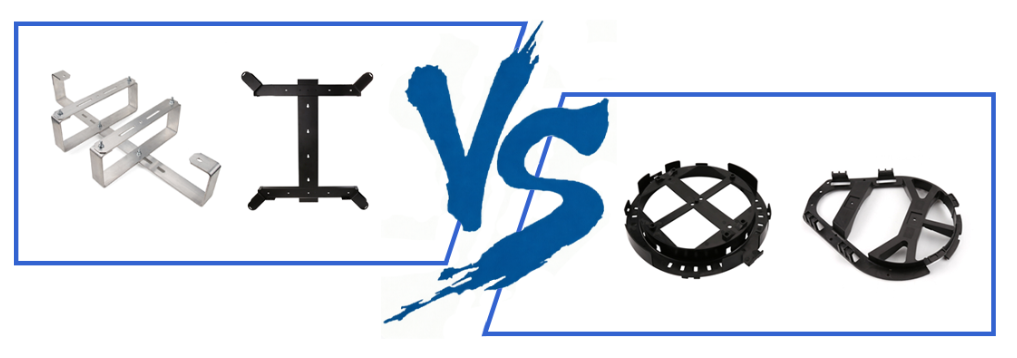
The Case for Aluminum: Durability and Performance
When it comes to high-end data centers and environments requiring superior thermal management, aluminum fiber optic slack storage.
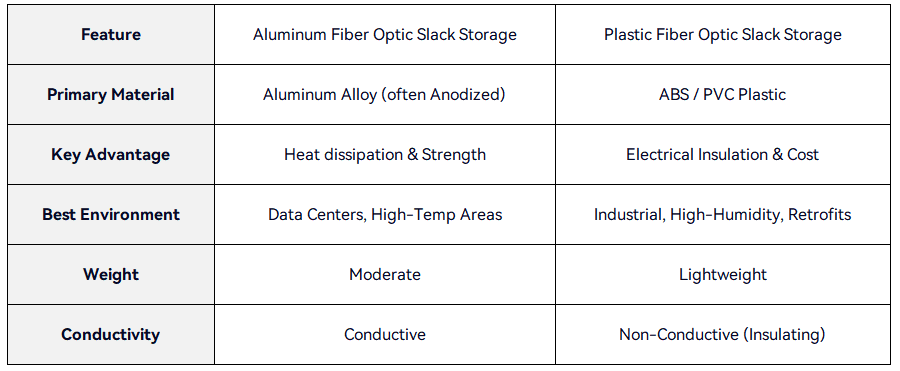
- Superior Heat Dissipation: Aluminum naturally dissipates heat more effectively than plastic. In high-density server environments where airflow and temperature control are critical, metal trays help maintain optimal operating conditions for sensitive fiber cables.
- Structural Rigidity: For long-span runs or heavy cable loads, aluminum provides the necessary stiffness to prevent sagging. This ensures that the cable slack storage system maintains the required bend radius, preventing signal loss or fiber breakage.
- Aesthetics and Longevity: In visible installations, such as modern server rooms, the sleek, metallic finish of aluminum offers a professional, industrial look that ages well without discoloration.
The Versatility of Plastic: Insulation and Flexibility
On the other hand, plastic fiber optic slack storage has carved out a significant niche in the market due to its versatility and cost-effectiveness. Typically made from high-quality ABS or PVC, these units are engineered to meet strict fire safety standards while offering unique benefits that metal cannot match.
- Electrical Isolation: One of the standout features of plastic is its non-conductive nature. In environments where electrical interference or grounding issues are a concern, a plastic tray acts as an insulator, protecting the fiber optics from potential electrical hazards.
- Corrosion Resistance: For industrial settings or areas with high humidity and chemical exposure, high-grade plastic is immune to corrosion and oxidation. This makes it a durable choice for harsh environments where metal might degrade over time.
- Ease of Installation: Plastic components are often lighter and easier to cut or modify on-site without specialized metalworking tools, allowing for rapid deployment in complex retrofitting scenarios.
Specialized Applications: The Snow Shoe Solution
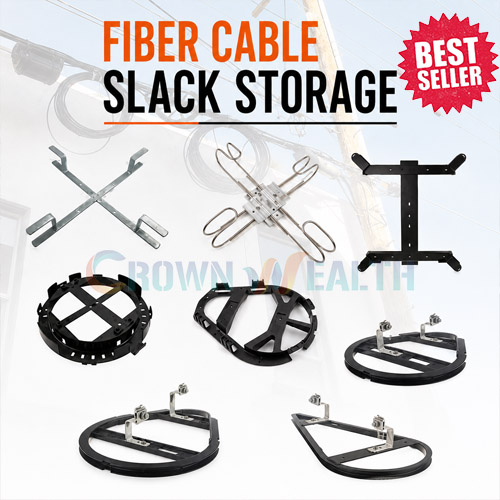
A unique variation in the market is the snow shoe fiber slack storage system. While the term “snow shoe” might evoke images of winter sports, in the context of fiber optics, it refers to specialized support structures designed to distribute weight and protect cables in specific overhead or high-load configurations.
Whether constructed from metal or reinforced plastic, these “snow shoe” style storage units are designed to prevent cable crushing and manage the “slack” (excess cable) effectively at the bottom of vertical risers or entry points. When selecting a snow shoe fiber slack storage solution, the choice often depends on the load-bearing requirements. Aluminum versions provide maximum support for heavy bundles, while plastic versions offer a lightweight, non-abrasive surface that is gentle on cable jackets.
Logistics and Transportation Considerations
For wholesalers and international buyers, the material choice significantly impacts logistics.
- Aluminum: While slightly heavier than plastic, aluminum is incredibly durable during transit. It can be stacked densely without fear of crushing, maximizing container space. However, care must be taken to prevent scratching during shipping.
- Plastic: Being lightweight, plastic cable slack storage units can significantly reduce shipping costs, especially for air freight. They are often designed to be nestable or stackable, optimizing volume. However, they require sturdy packaging to prevent deformation under heavy loads during ocean freight.
Comparison Summary
Conclusion: Choosing the Right Partner
Ultimately, there is no “one-size-fits-all” answer. A modern data center might utilize aluminum fiber optic slack storage for the main overhead trunking to leverage its strength and cooling properties, while employing plastic fiber optic slack storage for the final drop connections to ensure electrical isolation at the endpoint.
As a dedicated manufacturer and wholesaler, we provide both solutions to meet the diverse needs of the global market. Whether you require the rugged performance of metal or the versatile insulation of plastic, our cable slack storage, welcome to contact us!