English
 Spanish
 French
 Arabic
You can reduce dead end grip maintenance costs by selecting the correct grip for your cable, confirming the required mechanical performance, following the specified installation procedure, and identifying damage before it leads to an emergency repair.
For overhead power and communication projects, the purchase price is only one part of the cost. Replacement hardware, crew travel, access equipment, and service interruptions can all add to your maintenance budget.
This guide explains what to check when selecting, installing, and maintaining preformed dead end grips, with particular attention to ADSS and OPGW cable applications.
Why Dead End Grips Affect Your Maintenance Budget
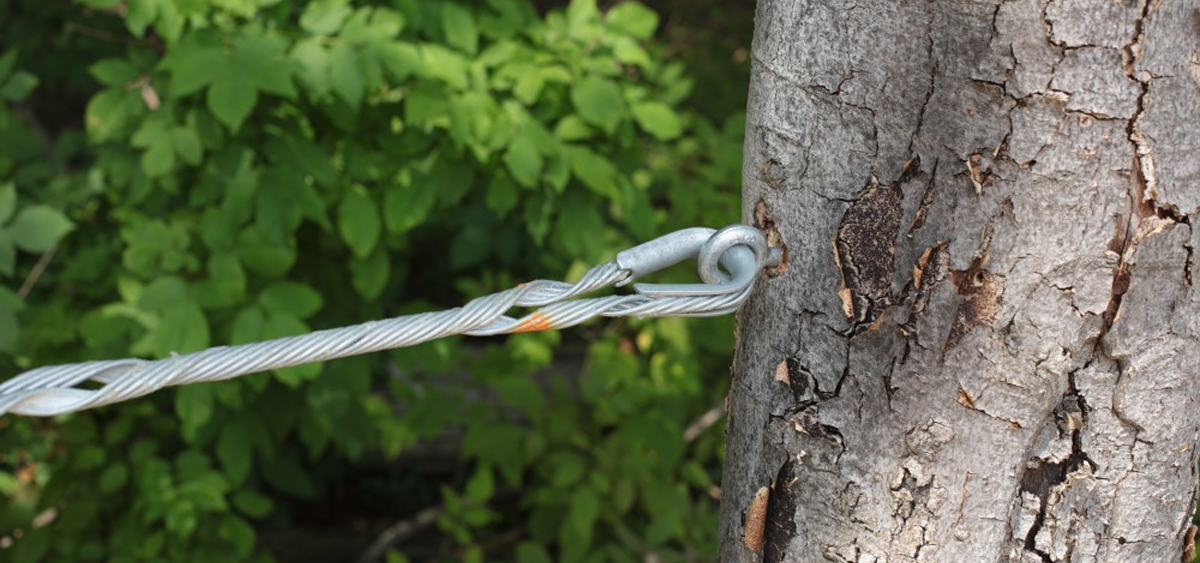
A preformed dead end grip uses helically formed rods to secure a specified cable or strand at a termination point. Depending on the assembly, it may work with protective rods and connecting hardware to transfer tension to the supporting structure.
However, dead end grips are application-specific. A grip designed for steel guy strand should not be assumed suitable for an ADSS fiber optic cable. Likewise, ADSS and OPGW dead-end assemblies should not be treated as interchangeable.
When you choose an unsuitable assembly, you may face installation rework, cable movement, or damage that requires further investigation. Reducing these risks starts with matching the complete assembly to your project.
1. Match the Grip to Your Cable and Application
Correct selection is the first step toward lower maintenance costs. Cable diameter matters, but it does not establish compatibility on its own.
Before ordering, confirm the following information:
| Selection factor | What you should confirm | Why it matters |
|---|---|---|
| Application | ADSS cable, OPGW cable, conductor, or guy strand | Different applications require different grip designs |
| Cable dimensions | Outside diameter and applicable tolerance | The grip must match the specified cable range |
| Cable construction | Jacket material or outer strand construction, as applicable | The assembly must be suitable for the surface it grips |
| Mechanical requirements | Required holding performance and project design loads | Diameter alone does not determine load suitability |
| Installation conditions | Span, line angle, and relevant wind or ice conditions | These contribute to the project’s mechanical requirements |
| Complete assembly | Protective rods and connecting hardware, where specified | Components must work together as an approved assembly |
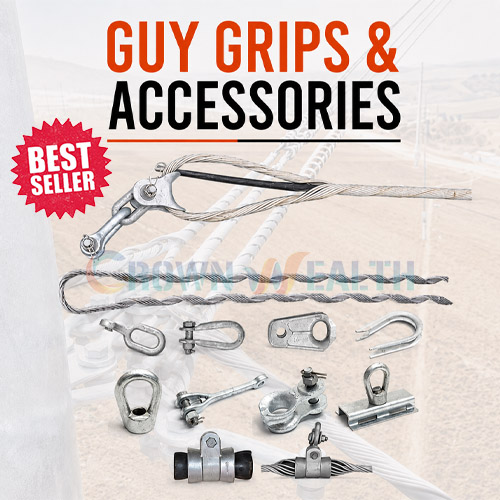
For ADSS projects, you can review Hbcrownwealth’s preformed guy grip tension clamps for ADSS as a starting point. Confirm the exact model against your cable data and project requirements before placing an order.
Do not substitute a similar-looking grip simply because it appears to fit.
2. Confirm Material Compatibility and Environmental Suitability
Your installation environment should inform your material and protective-finish requirements.
For example, coastal exposure, industrial contamination, and persistent moisture deserve specific attention during selection. Ask your supplier to confirm the proposed grip material, protective finish, and compatibility with the cable or strand.
Avoid relying on broad descriptions such as “weatherproof” or “corrosion-resistant.” Instead, request documentation relevant to the proposed model and your operating conditions.
Also inspect incoming products for visible coating damage, deformation, or contamination. Identifying these issues before installation can help you avoid unnecessary site work.
3. Prevent Rework with Correct Installation
Follow the installation instructions for the exact dead-end assembly you receive. A general installation method cannot cover every ADSS, OPGW, and guy-strand product.
Before installation, your crew should verify the part number, cable compatibility, assembly components, and condition of the hardware.
During installation, follow the specified requirements for:
- Positioning and alignment marks.
- Protective rods, where required.
- Rod application sequence and engagement.
- Compatible attachment hardware.
- Cable handling and tensioning.
Do not change the rod shape, mix components from different assemblies, or apply an improvised repair without manufacturer approval.
Installation and maintenance should be carried out by qualified personnel using the applicable line-work procedures. A documented installation check gives your maintenance team a useful reference for future inspections.
4. Use a Planned Inspection Schedule
A planned inspection program helps you identify developing problems and arrange corrective work before an urgent callout becomes necessary.
Set your inspection frequency according to the network owner’s requirements, manufacturer guidance, environmental exposure, and service history. A single inspection interval is not appropriate for every installation.
The following observations can help guide your inspection records:
| Inspection area | What to look for | Follow-up |
|---|---|---|
| Grip position | Movement compared with installation records or reference marks | Have qualified personnel assess the cause |
| Preformed rods | Broken, displaced, or visibly deformed rods | Obtain an assessment against the manufacturer’s criteria |
| Protective finish | Visible deterioration or corrosion | Record its location and extent for evaluation |
| Cable near the grip | Visible jacket wear, deformation, or other damage | Assess both the cable and the termination assembly |
| Connecting hardware | Wear, deformation, or missing components | Check against the approved assembly requirements |
Additional inspections may be appropriate after severe weather, impact, or abnormal loading, according to your network procedures.
Photographs, installation dates, part numbers, and previous findings make it easier to compare conditions over time.
5. Investigate Repeated Problems Before Replacing Parts
Replacing a damaged grip may restore the assembly, but it does not necessarily address the reason the damage occurred.
If the same location needs repeated attention, review:
- Whether the installed model matches the cable.
- Whether the assembly meets the project’s mechanical requirements.
- Whether installation followed the specified procedure.
- Whether connecting hardware is compatible.
- Whether environmental or loading conditions have changed.
For example, repeated movement should prompt a review of selection, installation, and loading. Simply fitting another grip of the same type may leave the underlying problem unresolved.
Use the manufacturer’s criteria to decide whether components require replacement. Do not assume that a removed grip can be reused; reuse and reapplication restrictions depend on the specific product.
6. Compare Total Cost, Not Just Unit Price
A lower purchase price does not automatically mean lower maintenance costs.
When comparing suitable products, consider the following cost categories:
Total ownership cost = purchase + installation + inspection + corrective maintenance + replacement + associated downtime costs.
Use the same operating period and project assumptions for each comparison. Where available, use your own maintenance records rather than estimated savings percentages.
Useful purchasing questions include:
- Is the proposed part number clearly identified?
- Does the documentation confirm compatibility with your cable?
- Are installation instructions available for the exact assembly?
- Can you obtain the required supporting hardware?
- Are relevant test records available for the proposed product?
- Can replacement orders be matched to the original specification?
These details help you compare offers more accurately and reduce the risk of ordering an unsuitable replacement.
7. Keep Spare Parts Identifiable and Protected
A practical spare-parts system can shorten repair preparation time.
Keep products in their protective packaging and follow the manufacturer’s storage instructions. Protect preformed rods from deformation and keep model labels readable.
For each stocked assembly, record its part number, applicable cable specification, quantity, and associated hardware. Avoid mixing loose components from different models.
Standardize spare parts where your network uses the same approved cable and assembly. Where cable specifications differ, maintain separate, clearly identified stock.
Frequently Asked Questions
What is the most effective way to reduce dead end grip maintenance costs?
Start with correct product selection and installation. Matching the assembly to your cable and mechanical requirements helps reduce avoidable rework. Planned inspections and clear maintenance records then support timely corrective action.
Can the same dead end grip be used for ADSS and OPGW cables?
Do not assume that one grip is suitable for both. ADSS and OPGW cables have different constructions and assembly requirements. Use a product specifically confirmed for your cable and application.
Is cable diameter enough to select a dead end grip?
No. You also need to confirm cable construction, required holding performance, installation conditions, and compatible hardware. Two cables with the same outside diameter may require different dead-end assemblies.
How often should dead end grips be inspected?
Inspection frequency should follow the network owner’s requirements and the manufacturer’s guidance. Environmental exposure, previous findings, and unusual events may justify additional inspections.
Can you reuse a dead end grip after removal?
Only if the manufacturer’s instructions expressly allow it under the relevant conditions. Repositioning during initial installation is not the same as reusing a product after service. Confirm the rules for the exact model before reapplication.
What information should you provide when requesting a quotation?
Provide the cable type, outside diameter, cable datasheet, mechanical requirements, quantity, and installation environment. Include the existing part number or assembly drawing when you need a replacement.
Discuss Your Dead-End Grip Requirements with Hbcrownwealth
Hbcrownwealth is a manufacturer, supplier, and wholesaler of hardware for overhead power and communication systems.
To discuss a new installation or replacement requirement, send us your cable datasheet, required quantity, operating conditions, and any relevant drawings. For an existing installation, include the current grip model and photographs of the complete assembly.
You can also review our ADSS cable guy grips to begin identifying the product information you need.
Contact Hbcrownwealth with your project details to discuss product selection and request a quotation.