English
 Spanish
 French
 Arabic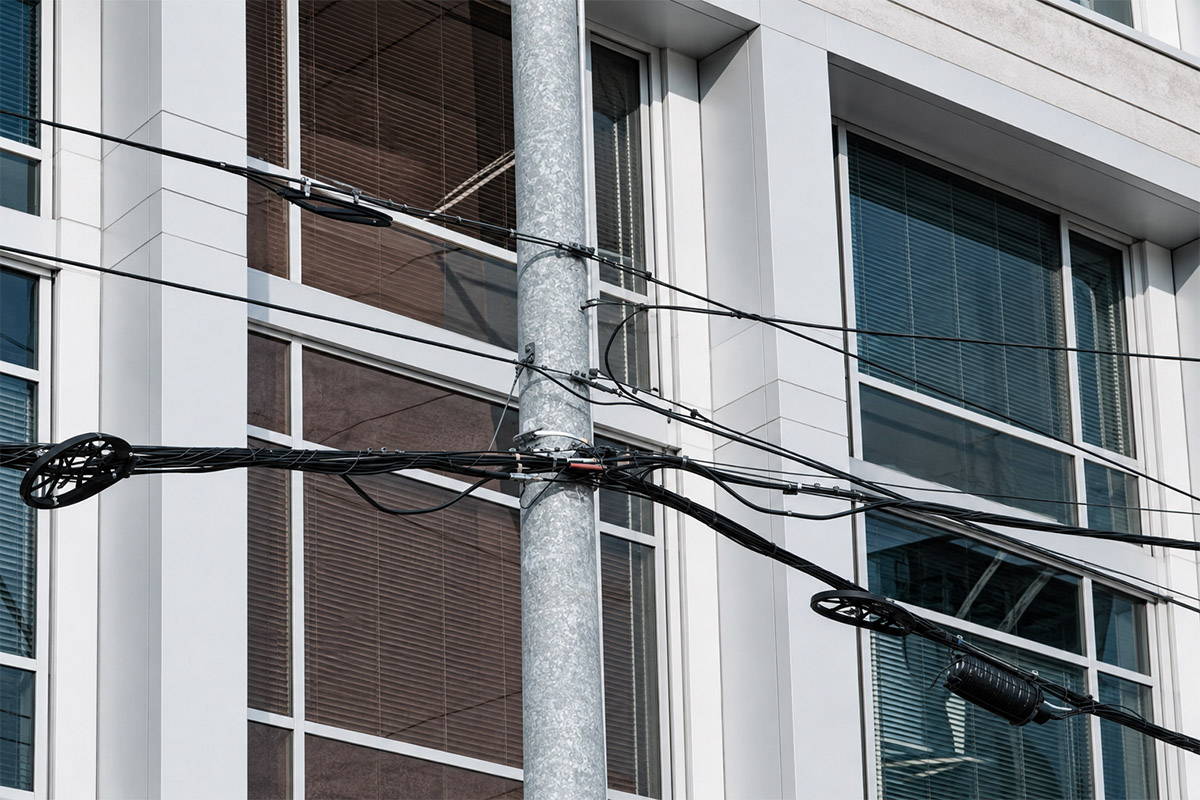
When you plan an aerial fiber network, you should treat fiber optic cable slack storage as part of your maintenance design—not as an accessory that you select at the last minute. A correctly specified storage system keeps reserve cable organized, accessible, and protected without forcing it below the cable manufacturer’s minimum bend radius.
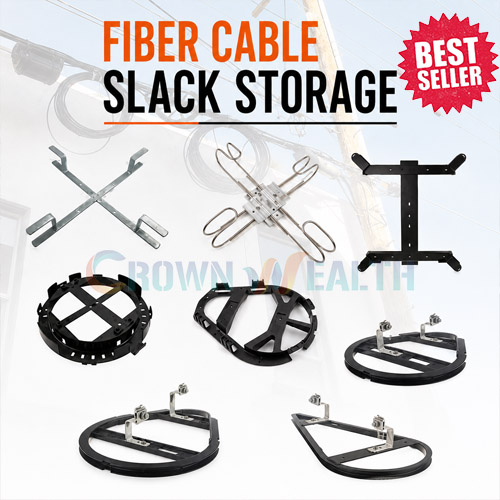
If you are comparing different materials, sizes, and mounting styles, explore Hbcrownwealth’s fiber optic cable slack storage solutions. You can find round storage wheels, plastic and aluminum sno-shoes, adjustable brackets, and other solutions for ADSS, OPGW, FTTH, and telecommunications networks.
However, you should not choose a storage unit by shape or price alone. First, you need to define the cable, reserve length, mounting position, environmental conditions, and maintenance method. Once you collect this information, you can specify the right product and request an accurate quotation.
Quick Answer
Fiber optic cable slack storage is a hardware system that holds a planned reserve length of optical cable for future splicing, repair, relocation, or network expansion. To choose the correct unit, you need to confirm the cable type, outer diameter, minimum bend radius, reserve length, mounting position, pole type, fastening method, and outdoor environment.
Start With Your Maintenance Plan
Before you select a fiber optic slack storage bracket, decide why you need the reserve cable.
For example, your technicians may need extra cable to:
- Lower a splice closure to the ground
- Replace a damaged cable section
- Move a closure to a safer position
- Add a future branch connection
- Reconfigure equipment
- Restore service after storm damage
- Extend the network without replacing the full cable span
Therefore, you should place slack cable at locations that support your actual maintenance strategy. These locations may include splice points, branch points, terminal poles, equipment connections, road crossings, network transition points, and planned restoration zones.
You should also avoid applying one standard reserve length to every project. The correct amount depends on the cable route, closure position, working method, local engineering rules, and future expansion plan.
Before you prepare an RFQ, answer these questions:
- Where will you install the splice closure?
- Will your technician work on the pole or lower the closure?
- How far may you need to relocate the closure?
- Will the reserve support one repair or several future operations?
- Does the project owner specify a minimum reserve length?
- Will the stored cable interfere with other pole hardware?
These answers help you calculate the required storage capacity more accurately.
Seven Inputs You Need Before Selecting a Storage Bracket
1. Cable Type and Support System
First, identify the cable construction and aerial support method.
You may need to store:
- ADSS fiber optic cable
- OPGW cable
- Lashed messenger cable
- Figure-8 cable
- Fiber optic drop cable
- Loose-tube outside plant cable
- Ribbon fiber optic cable
Although these cables perform similar communication functions, they do not always use the same mounting hardware. For example, an ADSS cable slack storage system may use hanger brackets that protect the cable jacket, while a lashed messenger installation may require a different attachment interface.
Consequently, you should provide the complete cable type instead of writing only “fiber cable” in your inquiry.
2. Cable Outer Diameter
Next, provide the actual cable outer diameter in millimeters or inches.
Fiber count alone does not define the physical size of a cable. Two cables with the same fiber count may use different jackets, strength members, buffer structures, and outer diameters.
The cable diameter affects:
- The number of loops the unit can hold
- The total storage capacity
- The required channel width
- The size of cable ties or retainers
- The minimum storage wheel diameter
- The overall weight of the stored cable
Therefore, always include the cable datasheet when possible.
3. Minimum Bend Radius
The storage unit must keep every cable loop above the cable manufacturer’s specified minimum bend radius.
In addition, you need to distinguish between the bend radius during installation and the allowable bend radius after installation. Corning’s cable bend radius definition explains that a cable under tensile load may have a different bend-radius requirement from a cable in a free, unloaded condition.
Do not select a bracket based only on its external dimensions. Instead, compare the cable’s required bend radius with the actual path that the cable follows around the storage unit.
A larger bracket does not automatically guarantee correct cable routing. The cable channel, entry angle, retaining points, and transition area also matter.
4. Planned Reserve Length
After you confirm the bend radius, calculate how much cable you need to store at each location.
The storage capacity depends on several connected factors:
- Cable outer diameter
- Loop diameter
- Number of loops
- Available channel depth
- Cable entry and exit arrangement
- Space required for safe removal
For this reason, a product description that lists only “10 meters” or “20 meters” may not give you enough information. You should confirm which cable diameter the manufacturer used when calculating that capacity.
5. Mounting Location
Next, decide whether you need pole mount fiber slack storage or an in-span system.
You can install pole-mounted units on wood poles, concrete poles, steel poles, lattice towers, walls, or other approved structures. In contrast, an in-span system attaches to an ADSS cable or lashed messenger system between supporting structures.
Each method creates different requirements for brackets, clamps, cable routing, wind loading, and maintenance access.
6. Attachment Surface and Hardware
You should clearly identify the supporting structure in your inquiry.
For example, specify whether you will install the unit on:
- A round wood utility pole
- A concrete pole
- A polygonal steel pole
- A lattice transmission tower
- A flat wall
- An ADSS cable span
- A lashed messenger strand
Then, confirm whether you need stainless steel bands, bolts, hanger brackets, strand clamps, cable ties, buckles, or other mounting accessories.
If you omit this information, you may receive the correct storage frame with the wrong installation kit.
7. Environmental Conditions
Finally, describe the project environment.
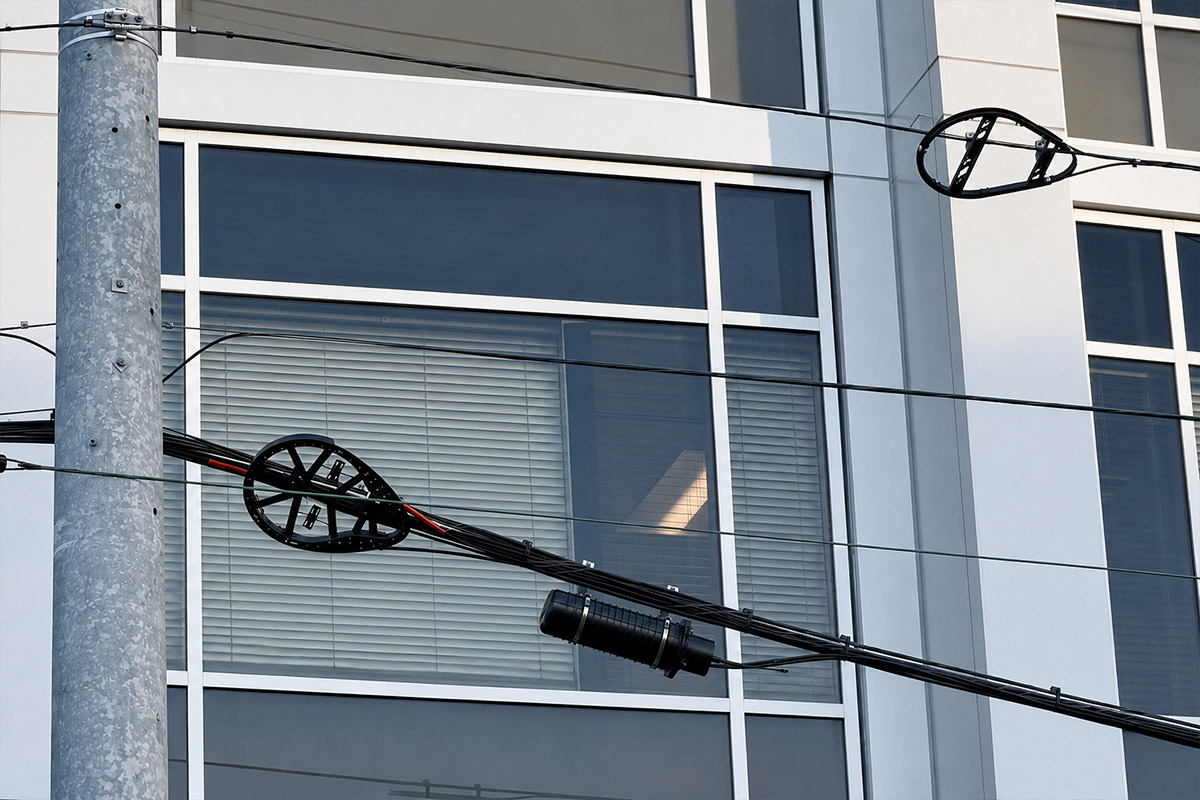
An outdoor fiber optic cable storage rack may face UV exposure, strong wind, rain, salt spray, ice, dust, industrial pollution, and temperature changes. These conditions affect your material and hardware selection.
For example, you may choose:
- UV-resistant plastic for lightweight and electrically nonconductive applications
- Fiberglass-reinforced plastic for additional mechanical strength
- Aluminum alloy for strength and corrosion resistance
- Galvanized steel for rigid pole or tower mounting
- Stainless steel components for wet or corrosive environments
However, you should evaluate the complete assembly. A corrosion-resistant frame will not solve the problem if the bolts, bands, or cable retainers cannot withstand the same environment.
Pole-Mount or In-Span Fiber Slack Storage?
Both systems organize reserve cable, but they serve different installation conditions.
| Selection point | Pole-mount storage | In-span storage |
|---|---|---|
| Typical location | Wood, concrete or steel pole | ADSS cable or messenger span |
| Common application | Splice point, terminal pole or equipment connection | Cable reserve between poles |
| Main attachment | Bands, bolts or pole brackets | Hanger or messenger brackets |
| Maintenance access | Concentrated at a fixed structure | Accessed within the aerial span |
| Key consideration | Pole congestion and working clearance | Cable interface and span loading |
| Common keyword | pole mount fiber slack storage | in-span fiber slack storage |
You should select the installation method during network design. Do not purchase a pole bracket and assume that you can convert it into an in-span system with generic clamps.
Moreover, check the cable route around the pole. If the cable passes behind or around other hardware, add smooth cable guides and maintain enough clearance from sharp edges.
Turn Your Field Data Into a Product Specification
Confirm the Storage Geometry
Specify the minimum acceptable loop diameter and the required cable capacity. Then, ask the supplier to confirm the usable channel width, channel depth, and cable retention method.
This step helps you compare different fiber storage units for ADSS cable on the same basis.
Match the Mounting Interface
Identify the pole, tower, wall, ADSS cable, or messenger strand. Next, list every fastening component you expect the supplier to include.
For large projects, request a complete kit list. As a result, your installers will not need to source incompatible brackets or fasteners after the shipment arrives.
Check Cable Contact Surfaces
The cable should follow a smooth path without contacting burrs, sharp corners, exposed threads, or narrow pressure points.
In addition, cable ties and retainers should hold the cable without crushing the jacket. Your installer must be able to remove the reserve cable without damaging it.
Select the Material for the Environment
Choose the material according to your site conditions, project life, electrical requirements, and budget. You should also confirm the material of the bolts, bands, clamps, and retainers—not only the main storage frame.
Plan for Technician Access
A good aerial cable slack storage system should protect the cable while still allowing technicians to retrieve it.
Therefore, leave enough room to:
- Inspect the cable jacket
- Release the retaining points
- Remove the required number of loops
- Access the splice closure
- Reinstall the remaining reserve cable
- Complete future maintenance safely
Common Specification Mistakes to Avoid
Ordering by Nominal Size Alone
A 16-inch or 17-inch product name does not describe every important dimension. Always confirm the usable cable path, channel size, mounting spacing, and supported bend radius.
Using a Universal Reserve Length
Different splice points require different amounts of cable. Calculate the reserve according to the maintenance task and network plan.
Ignoring the Cable Datasheet
Do not estimate the cable diameter or bend radius from its fiber count. Instead, use the manufacturer’s technical data.
Mixing Pole-Mount and In-Span Hardware
These systems use different load paths and attachment methods. Clearly state where you will install the unit.
Overtightening Cable Ties
Tight ties can deform the cable jacket and create local stress. Your installer should secure the cable without compressing it.
Forgetting Small Installation Components
Bands, buckles, bolts, hanger brackets, cable ties, and cable guides can determine whether your crew completes the installation on schedule. Include them in the RFQ.
Choosing Material Only by Price
A lower purchase price may lead to higher maintenance costs if the material does not match the UV, corrosion, temperature, or mechanical requirements of your project.
Fiber Optic Slack Storage RFQ Checklist
Use the following table when you request a quotation from a manufacturer or supplier.
| Required information | Details you should provide |
|---|---|
| Project application | FTTH, telecom, utility, ADSS, OPGW or rural broadband |
| Cable type | ADSS, OPGW, lashed messenger, drop cable or other |
| Cable outer diameter | Millimeters or inches |
| Minimum bend radius | Loaded and unloaded values from the cable datasheet |
| Reserve cable length | Required length at each storage point |
| Installation method | Pole-mount, wall-mount, tower-mount or in-span |
| Supporting structure | Wood, concrete, steel pole, tower, wall or messenger |
| Environmental conditions | Temperature, UV, wind, ice, moisture or salt exposure |
| Required material | Plastic, composite, aluminum, galvanized steel or stainless steel |
| Mounting hardware | Bands, buckles, bolts, clamps, hangers and cable retainers |
| Order quantity | Sample quantity and estimated bulk demand |
| Customization | Dimensions, color, logo, packaging or new mold |
| Documents | Drawings, cable datasheet, test requirements and packaging standard |
When you provide this information, your supplier can recommend a suitable fiber cable storage bracket and quote the correct installation kit. You also reduce technical questions, sampling delays, and specification errors.
Work With Hbcrownwealth on Your Cable Storage Project
Hbcrownwealth manufactures and supplies fiber optic cable management and aerial line hardware for overseas distributors, telecom contractors, network operators, and infrastructure companies.
Depending on your project, you can choose from:
- Round plastic cable wheel slack storage systems
- Plastic fiber optic sno-shoe units
- Aluminum fiber optic sno-shoes
- Adjustable stainless steel wire brackets
- Galvanized fiber cable storage brackets
- Pole-mounted and aerial installation accessories
You can review the available fiber optic cable slack storage products from Hbcrownwealth before preparing your inquiry.
Furthermore, you can send your cable datasheet, installation drawing, project quantity, product sample, or site photo. Hbcrownwealth can help you compare suitable dimensions, materials, mounting hardware, and packaging options. OEM and ODM services are also available for distributors and project-specific orders.
Frequently Asked Questions
What is the difference between slack storage and a splice closure?
Slack storage holds the reserve length of fiber optic cable. A splice closure protects fiber joints and internal splicing components. You may install both products at the same maintenance location, but they perform different functions.
How much fiber cable slack should you leave?
There is no universal reserve length for every project. You should calculate it according to the splice location, repair method, closure access, route design, local standards, and future expansion plan.
Can one fiber slack storage unit support both ADSS and OPGW cable?
It may support both cable types if its capacity, bend radius, material, and mounting hardware match each cable. However, you should verify the complete technical specification before ordering.
What information does a fiber slack storage supplier need?
You should provide the cable type, outer diameter, minimum bend radius, reserve length, mounting location, supporting structure, environmental conditions, required hardware, and order quantity.
Is a fiber optic sno-shoe the same as fiber optic cable slack storage?
A fiber optic sno-shoe is one type of fiber optic cable slack storage. Its curved shape guides the cable around a controlled path and helps maintain the required bend radius.
Can you install fiber optic slack storage on a steel or concrete pole?
Yes, provided that you select a compatible pole-mount bracket and fastening system. Stainless steel bands and approved bolts are common options, but the final method must follow your project design.
Should you order mounting hardware with the storage unit?
Yes. Ordering the correct bands, bolts, clamps, hangers, buckles, and cable retainers with the storage unit can reduce compatibility problems and installation delays.
Conclusion
A reliable fiber network starts with clear project data. When you specify fiber optic cable slack storage, begin with the cable datasheet and maintenance plan. Then, confirm the reserve length, bend radius, mounting location, supporting structure, environment, and installation hardware.
By following this process, you can protect your reserve cable, simplify future repairs, and request more accurate quotations. Contact Hbcrownwealth if you need standard products, bulk supply, OEM manufacturing, or a customized fiber slack storage solution for your aerial network project.