English
 Spanish
 French
 Arabic
When you choose a steel utility pole for power transmission, telecom networks, or lighting systems, the pole shape plays an important role in performance, installation, and long-term cost. Today, polygonal steel poles and cylindrical steel poles are two of the most widely used options in modern infrastructure projects.
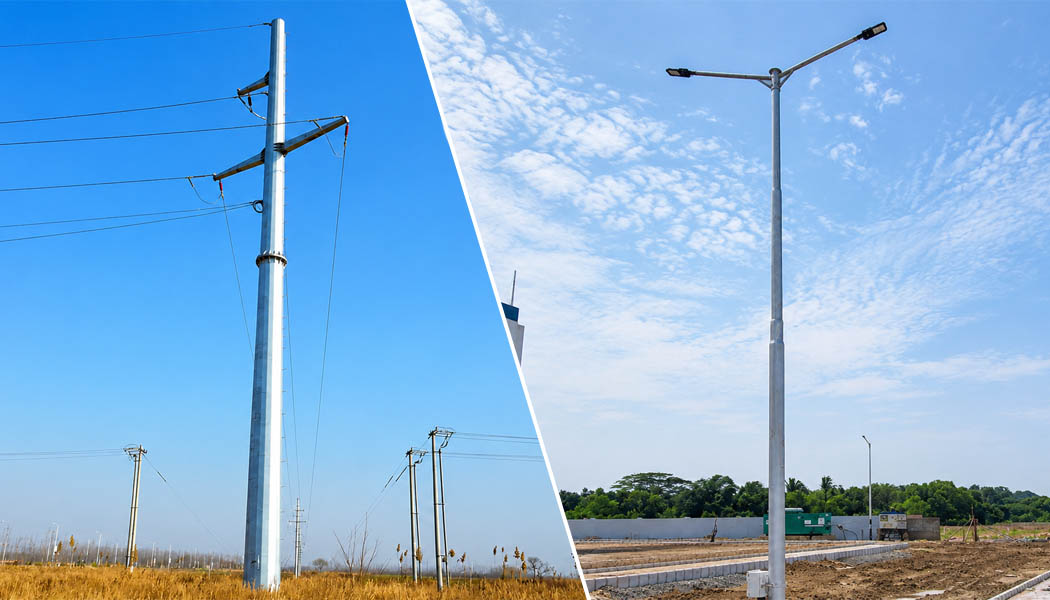
At Hbcrownwealth, you can find high-quality galvanized steel pole solutions for different applications worldwide. However, many buyers still ask an important question: Which is better, a polygonal steel pole or a cylindrical steel pole?
The answer depends on your project requirements, environmental conditions, and structural demands. Therefore, understanding the differences can help you make the right investment.
What Is a Polygonal Steel Pole?
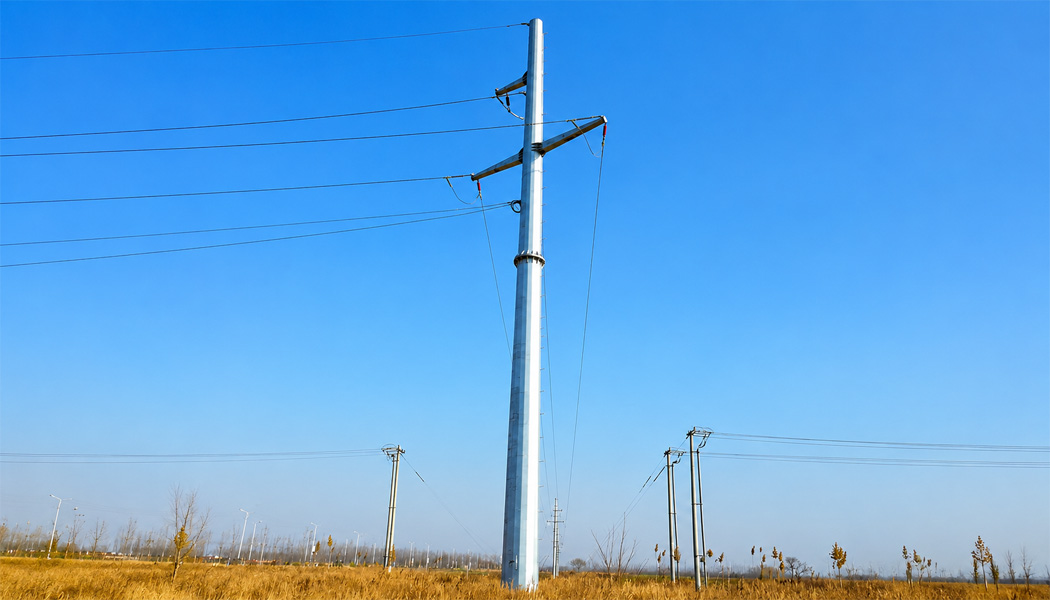
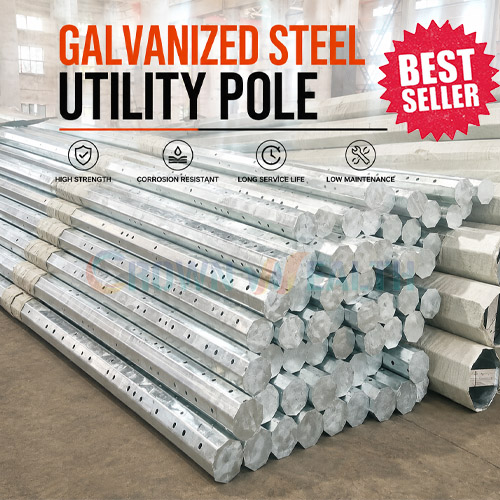
A polygonal steel pole is manufactured with multiple flat sides, usually in hexagonal, octagonal, or dodecagonal shapes. Because of its geometric structure, the pole provides excellent load-bearing capacity while maintaining a relatively lightweight design.
Most galvanized polygonal steel poles are produced from high-strength steel plates through bending and welding processes. After fabrication, the pole is protected with hot dip galvanizing to improve corrosion resistance.
Polygonal poles are commonly used for:
- Power transmission lines
- Electrical distribution systems
- Telecom towers
- Highway lighting
- Smart city infrastructure
In addition, many utility companies prefer polygonal steel poles because they offer strong structural stability under heavy wind loads.
What Is a Cylindrical Steel Pole?

A cylindrical steel pole features a smooth round structure with a uniform circular shape. Compared with polygonal designs, cylindrical poles provide a more aesthetic and streamlined appearance.
Because of their clean surface and modern design, cylindrical steel poles are widely used in urban projects and public infrastructure.
Typical applications include:
- Street lighting
- Urban utility systems
- CCTV monitoring
- Decorative lighting
- Communication networks
Furthermore, cylindrical steel poles can reduce wind resistance because of their smooth surface geometry.
Structural Strength Comparison
When comparing structural performance, polygonal steel poles usually provide higher rigidity and load capacity. Their multiple-sided structure distributes stress more effectively, especially in high-load environments.
As a result, polygonal poles are ideal for:
- Long-span transmission lines
- Heavy cable loads
- High-wind regions
- Large infrastructure projects
On the other hand, cylindrical steel poles perform well in medium-load applications where aesthetics and aerodynamic performance are more important.
Therefore, if your project requires maximum structural strength, a polygonal steel pole is often the better choice.
Appearance and Design
Appearance is another important factor, especially in urban and commercial projects.
Cylindrical steel poles offer:
- Smooth visual appearance
- Modern architectural style
- Better integration with urban landscapes
Meanwhile, polygonal steel poles provide:
- Industrial and professional appearance
- Stronger visual stability
- Better compatibility with power infrastructure
Because of this, cylindrical poles are often selected for city streets and public spaces, while polygonal poles dominate utility and transmission projects.
Wind Resistance Performance
Both pole types provide excellent wind resistance when properly engineered. However, their aerodynamic behavior differs slightly.
Cylindrical steel poles allow wind to flow more smoothly around the surface, which can reduce drag forces.
Nevertheless, polygonal steel poles compensate with stronger structural rigidity and improved resistance to bending forces.
Therefore:
- Cylindrical poles are suitable for moderate wind conditions.
- Polygonal poles are better for extreme environments and heavy-duty utility systems.
Manufacturing Process
Both polygonal and cylindrical steel poles are manufactured using advanced steel fabrication technology.
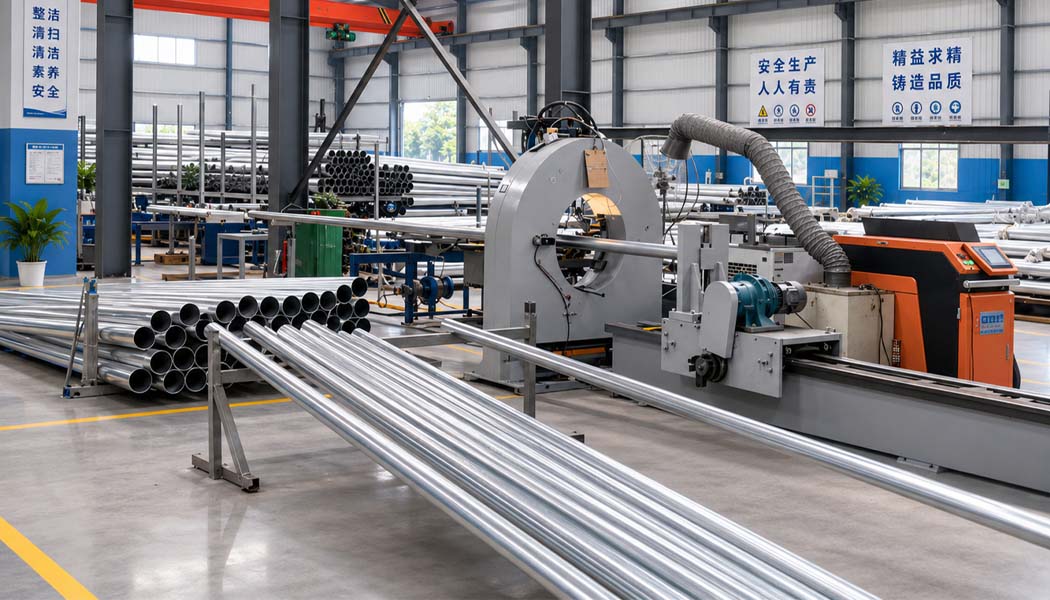
The typical process includes:
- Steel plate cutting
- Bending or rolling
- Automatic welding
- Surface grinding
- Hot dip galvanizing
- Quality inspection
At Hbcrownwealth, every galvanized steel utility pole undergoes strict quality control to ensure durability, dimensional accuracy, and long-term outdoor performance.
Why Choose Hbcrownwealth?
At Hbcrownwealth, you can get customized galvanized steel pole solutions for power, telecom, and infrastructure projects worldwide.
Key advantages include:
- Experienced steel pole manufacturer
- Advanced production equipment
- High-quality raw materials
- Hot dip galvanizing technology
- Strict quality inspection
- Competitive factory pricing
- Fast delivery support
- Custom production services
Whether you need polygonal steel poles, cylindrical steel poles, tapered steel poles, steel utility poles, or steel power poles, you can receive professional manufacturing support for your project.
Conclusion
Both polygonal steel poles and cylindrical steel poles offer important advantages. Polygonal poles provide higher structural strength and are ideal for utility transmission projects. In contrast, cylindrical poles deliver a cleaner appearance and better suitability for urban environments.
Therefore, choosing the right steel utility pole depends on your application, environmental conditions, and engineering requirements.
If you are looking for reliable galvanized steel pole solutions, Hbcrownwealth can help you find the right product for your infrastructure project.