English
 Spanish
 French
 Arabic
hen you plan a power distribution project, the utility pole is more than a simple support structure.
You need to consider the pole height, structural load, wind conditions, mounting points, corrosion protection, installation method and transportation.
For many modern projects, a galvanized steel utility pole gives you a strong and flexible solution.
However, not every steel pole has the same design.
Before you place an order, you should understand which specifications matter and what information your manufacturer needs.
This guide explains how to choose a galvanized steel utility pole for power distribution, telecommunications and infrastructure projects.
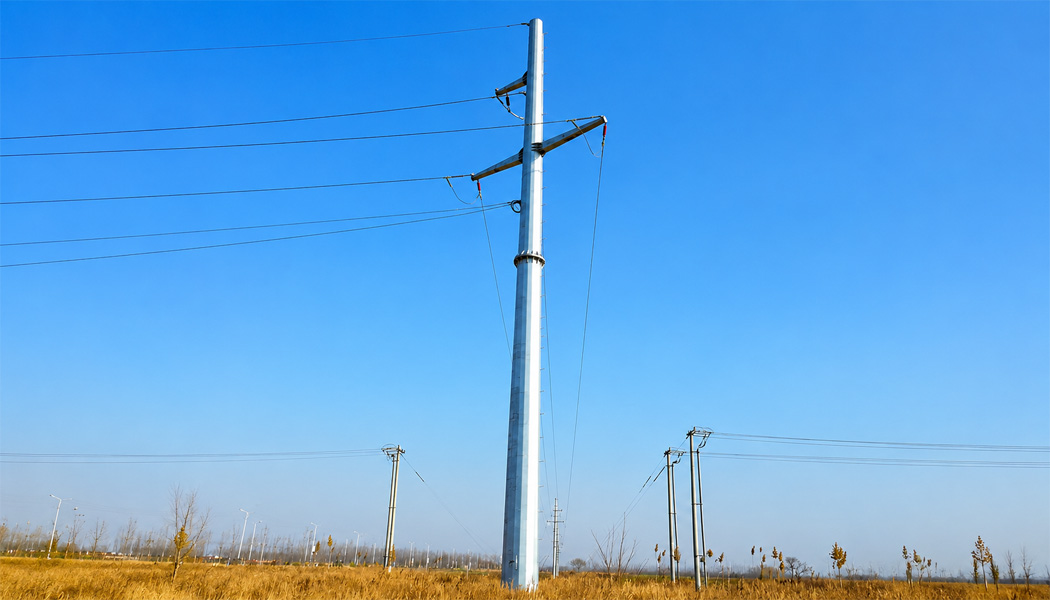
As power networks continue to expand, you need stronger, longer-lasting, and more cost-effective pole solutions. That is why galvanized steel utility poles are becoming the preferred choice for utilities, contractors, telecom companies, and infrastructure developers worldwide. Compared with traditional wood or concrete poles, steel poles deliver better durability, higher strength, and lower maintenance costs.
Why Galvanized Steel Poles Are the Better Choice
A galvanized steel pole offers exceptional structural performance while reducing long-term operating costs. Because steel has high tensile strength, the pole can withstand strong wind loads, heavy cable tension, and harsh weather conditions. In addition, hot dip galvanizing protects the surface from corrosion, which significantly extends the service life.
Unlike wooden poles, galvanized steel utility poles do not crack, rot, or attract insects. They also require less maintenance over time. As a result, you can reduce replacement frequency and improve infrastructure reliability.

Furthermore, steel poles provide a cleaner and more modern appearance, making them suitable for both urban and rural installations.
Different Types of Steel Utility Poles
Polygonal Steel Pole
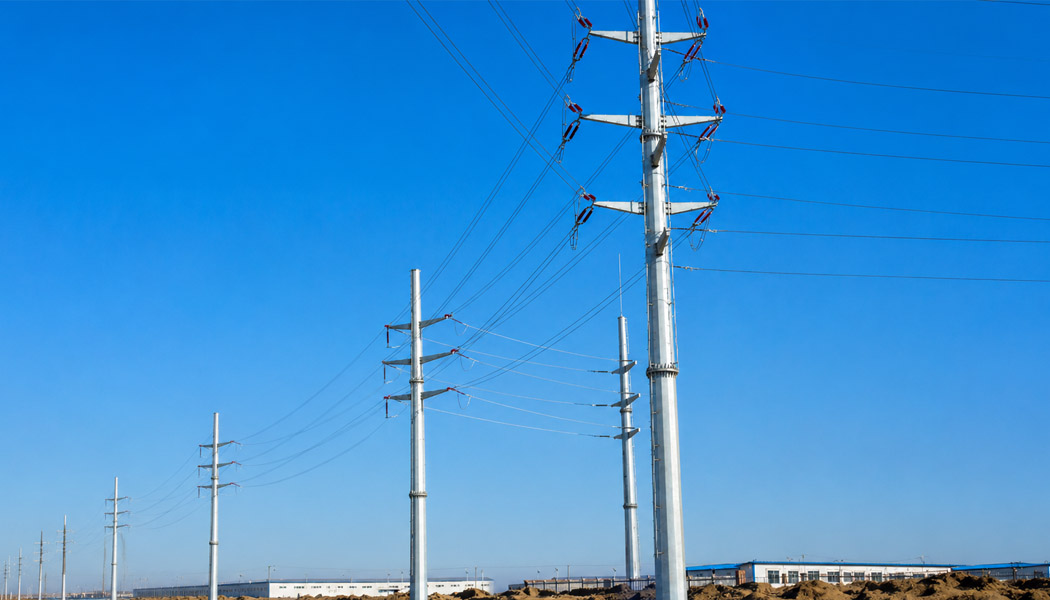
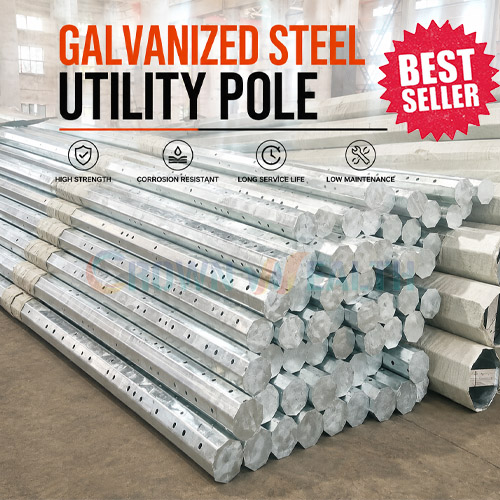
A polygonal steel pole is widely used in power transmission and distribution projects. Its multi-sided structure improves load-bearing capacity while maintaining a lightweight design. Therefore, you can achieve easier transportation and installation without sacrificing strength.
Polygonal poles are ideal for:
- Power transmission lines
- Substation projects
- Highway lighting
- Telecom infrastructure
- Smart city projects
Cylindrical Steel Pole
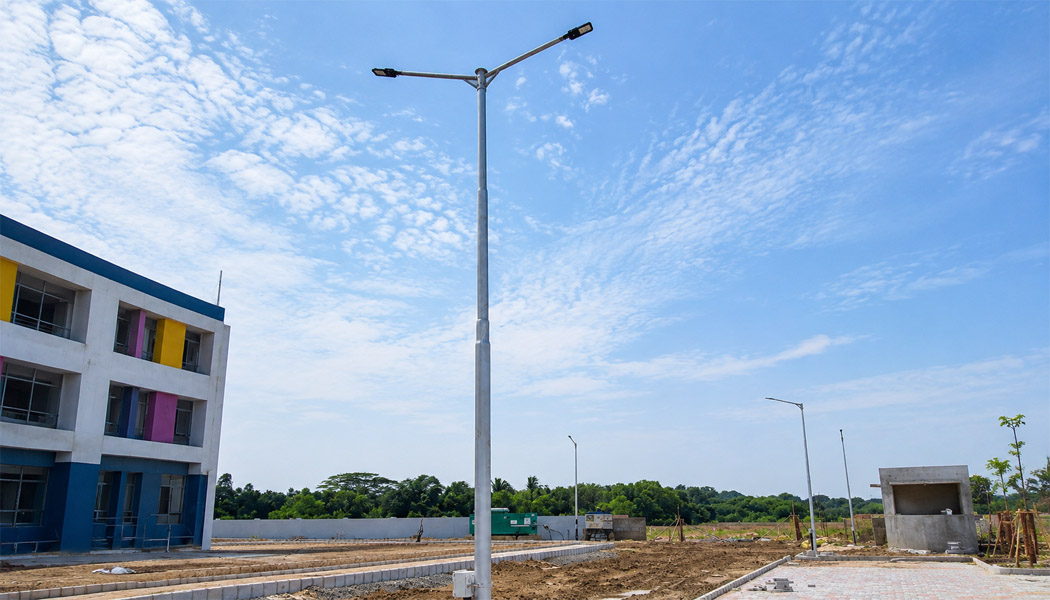
A cylindrical steel pole features a smooth round structure that provides excellent wind resistance and aesthetic value. Because of its clean appearance, it is commonly used in urban streets, commercial districts, and public infrastructure projects.
In addition, cylindrical steel poles are suitable for:
- Street lighting
- Urban utility networks
- CCTV systems
- Traffic monitoring systems
- Communication towers
Tapered Steel Pole

A tapered steel pole gradually decreases in diameter from bottom to top. This design improves structural efficiency while reducing material usage. Consequently, you benefit from lower transportation costs and easier installation.
Tapered poles are commonly used for:
- Power distribution systems
- Telecom applications
- Solar lighting projects
- Industrial facilities
- Rural electrification
What Should You Check Before Buying a Steel Utility Pole?
A good quotation starts with good technical information.
Instead of asking only for a “10-meter steel pole,” you should provide as much project information as possible.
The following factors are especially important.
1. Pole Height
First, determine the required pole height.
The correct height depends on:
- Conductor clearance
- Road or ground clearance
- Equipment location
- Installation depth
- Cross-arm position
- Local engineering requirements
Two poles with the same overall height may still have very different designs.
For example, a direct-buried pole and a base-mounted pole may require different structures.
Therefore, always explain how you plan to install the pole.
2. Pole Shape
Steel utility poles can have several shapes.
An octagonal steel pole has eight sides and is commonly used in utility and infrastructure projects.
A polygonal pole may have more sides when the project requires a different structural design.
Round poles are also available for some applications.
Shape can affect manufacturing, appearance and structural design, but it should not be the only factor in your decision.
Your load requirements are more important.
If you want to learn more about multi-sided poles, read our guide to polygonal steel poles.
You can also view our octagonal steel pole manufacturing solutions.
3. Top and Bottom Dimensions
Most steel power poles use a tapered design.
This means the bottom section is larger than the top.
When requesting a customized pole, you should provide:
- Top diameter or dimension
- Bottom diameter or dimension
- Pole length
- Taper requirement
- Number of sides
These dimensions help the manufacturer understand the basic pole geometry.
If you already have an engineering drawing, send the drawing instead of describing every dimension by email.
4. Wall Thickness
Wall thickness is another important specification.
However, thicker steel does not automatically mean that a pole is suitable for your project.
The correct thickness should work together with:
- Steel grade
- Pole dimensions
- Pole height
- Design load
- Wind load
- Attachment points
Therefore, you should select wall thickness according to the complete pole design.
Do not compare quotations only by thickness.
5. Wind and Structural Loads
This is one of the most important factors for a power distribution pole.
Your pole may need to support:
- Conductors
- Cross arms
- Insulators
- Transformers
- Communication cables
- Fiber optic cables
- Street lights
- Other pole line hardware
At the same time, wind creates additional loads on both the pole and installed equipment.
You should provide the required design load and wind conditions whenever they are available.
For engineered projects, drawings and load data allow the manufacturer to understand your requirements more accurately.
6. Mounting Points and Pole Hardware
A steel utility pole rarely works alone.
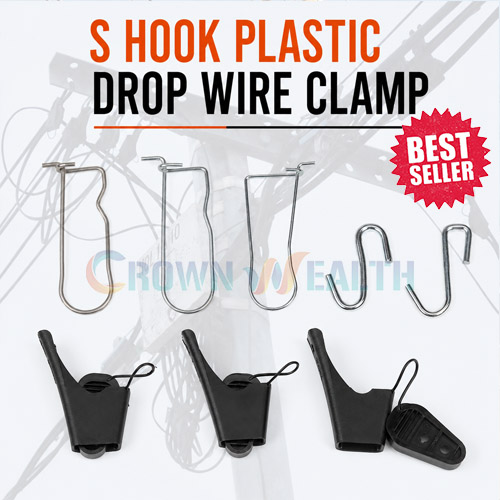
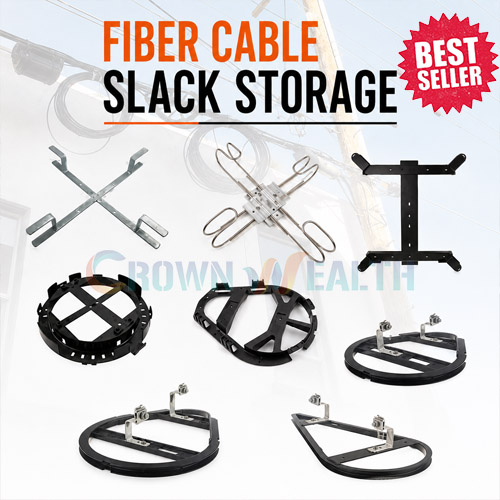
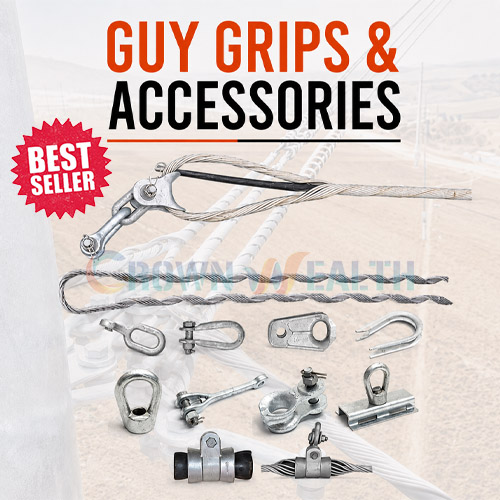
You may need to install cross arms, brackets, insulators, guy wires, cable clamps and many other accessories.
Therefore, determine the required mounting positions before production.
Depending on your design, the manufacturer can prepare:
- Mounting holes
- Cross-arm holes
- Bracket positions
- Base plates
- Cable entry holes
- Climbing accessories
- Grounding points
- Other custom attachments
Planning these details before galvanizing can reduce additional work during installation.
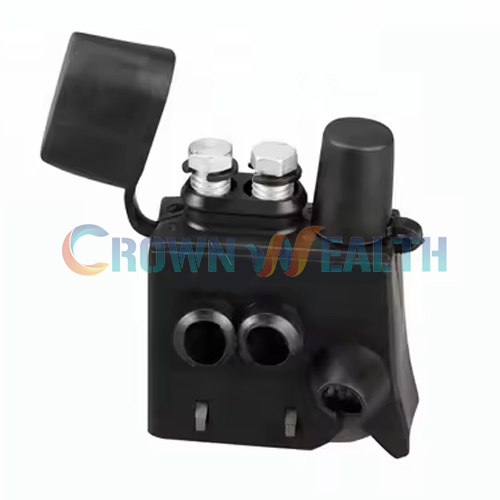
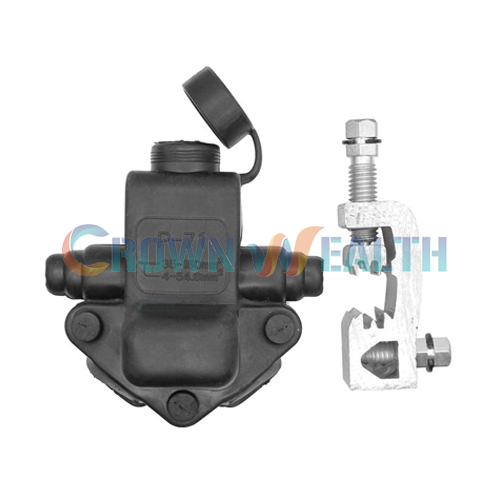
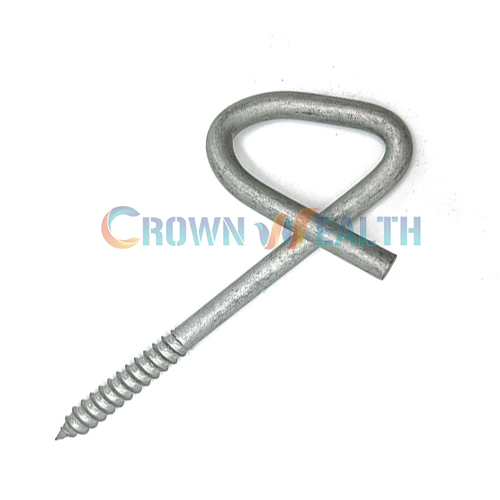
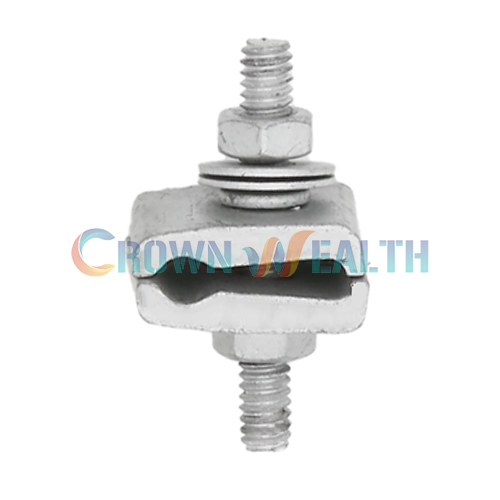
Hbcrownwealth also manufactures a wide range of pole line hardware for overhead power and telecommunication systems.
Steel Distribution Pole vs Steel Transmission Pole
Although both products may look similar, distribution and transmission projects usually have different engineering requirements.
A steel distribution pole normally supports local power distribution systems that deliver electricity closer to users.
A steel transmission pole supports higher-capacity transmission systems and may require a larger and stronger structure.
Therefore, you should not select a pole simply by looking at a product photo.
The final pole design should match your actual line requirements.
Hot Dip Galvanizing Process
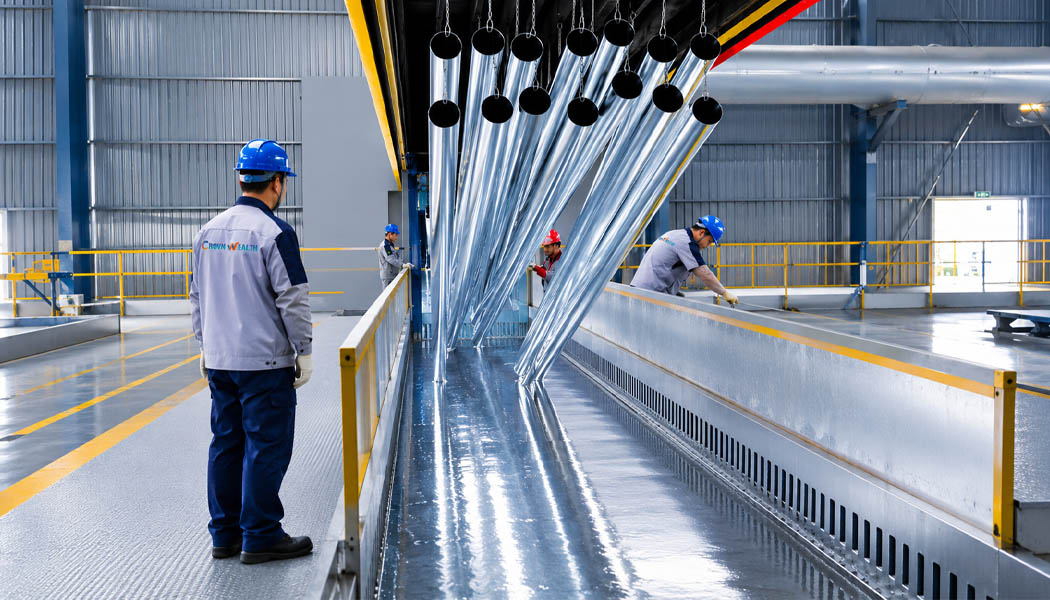
Hot dip galvanizing is one of the most important steps in steel pole manufacturing. During this process, the steel pole is immersed in molten zinc to create a protective anti-corrosion coating.
This galvanizing layer helps:
- Prevent rust and oxidation
- Extend outdoor service life
- Improve weather resistance
- Reduce maintenance costs
- Enhance durability in coastal and humid environments
Because galvanized steel poles can perform reliably for decades, they are widely used in utility and infrastructure projects around the world.
Why Choose Hbcrownwealth
Choosing the right supplier is just as important as choosing the right product. At Hbcrownwealth, you can receive professional support from manufacturing to final delivery.
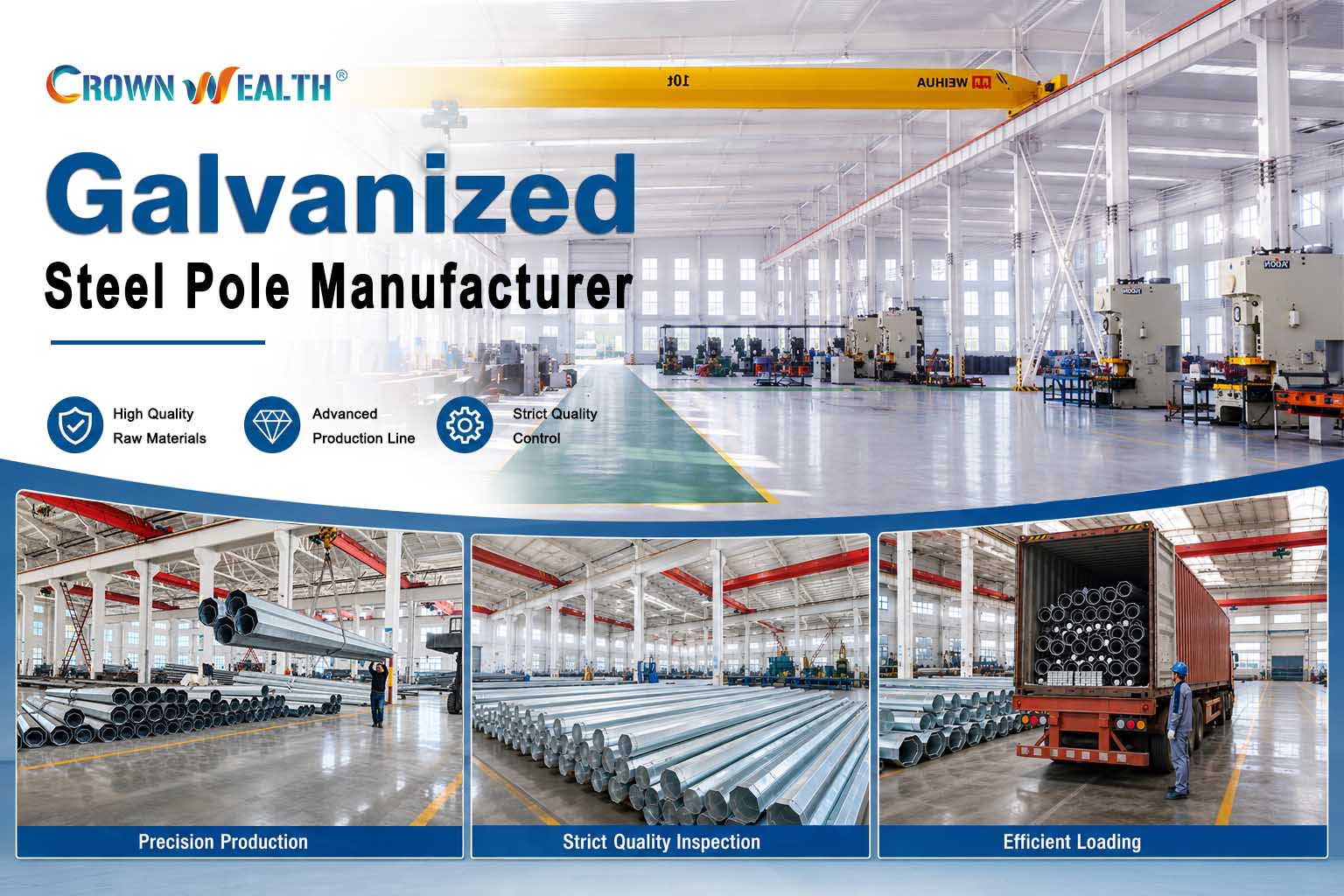
Key advantages include:
- Experienced steel pole manufacturer
- Stable production capacity
- Strict quality inspection
- Advanced galvanizing technology
- Competitive factory pricing
- Fast delivery time
- OEM & ODM support
- Global export experience
- Professional technical team
Most importantly, you can get customized steel utility pole solutions that match your exact project needs while maintaining high quality and cost efficiency.
Frequently Asked Questions
What is a galvanized steel utility pole?
A galvanized steel utility pole is a steel structure protected by a zinc coating and used to support overhead power, telecommunications and other utility equipment.
Are galvanized steel utility poles used for power distribution?
Yes. Steel utility poles are widely used in power distribution systems. However, the final pole design should match the required height, load, wind conditions and installation method.
What shape of steel utility pole should you choose?
You can choose octagonal, polygonal, round or other designs. The best option depends on your engineering requirements rather than shape alone.
Can steel utility poles be customized from drawings?
Yes. You can provide drawings for customized height, dimensions, thickness, base plates, holes, mounting points and other details.
What should you send when requesting a steel utility pole quotation?
Send the quantity, height, dimensions, application, loads, installation method, surface treatment, standards and drawings when available.
Why is hot-dip galvanizing used on steel poles?
Hot-dip galvanizing adds a zinc protective layer that helps reduce steel corrosion during outdoor service.
Choose the Right Galvanized Steel Utility Pole for Your Project
A galvanized steel utility pole for power distribution should be selected according to engineering requirements, not only price or appearance.
Before you order, check the pole height, dimensions, structural load, wind conditions, mounting points, installation method, galvanizing requirements and applicable standards.
Most importantly, provide your drawings whenever possible.
If you need customized steel distribution poles, steel power poles, octagonal poles or related pole line hardware, send Hbcrownwealth your project requirements.
We can review your specifications and support customized production for your infrastructure project.