English
 Spanish
 French
 Arabic
When you need a flexible fastening material for cables, pipes, packaging, or general construction, galvanized steel fixing band gives you one roll that you can cut and shape on site. The perforated holes let you fasten the strip with suitable screws, bolts, or nails. Meanwhile, the galvanized steel helps you control outdoor corrosion.
However, you should not choose fixing band by width alone. Before you buy, check the band thickness, hole size, hole spacing, edge profile, coating, fastener, working load, and installation environment. This guide shows you how to compare the main options and prepare a clear RFQ.
What Is Galvanized Steel Fixing Band?
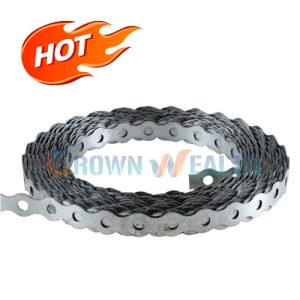
Galvanized steel fixing band is a flexible strip with evenly spaced holes along its length. You can cut the roll, bend the strip around an item, and connect it with a fastener that suits the substrate and load.
Manufacturers also call this product perforated fixing band, fixing banding, metal fixing strap, or galvanized perforated strapping. You can use these terms when you compare suppliers, but you should always check the drawing because dimensions vary between markets.
The zinc coating protects the steel from early rust. In addition, Hbcrownwealth can apply a black spray finish when you need a dark appearance or another protective layer. If your project faces coastal salt, industrial chemicals, or continuous moisture, state the required corrosion class and test method in your specification.
Galvanized Steel Fixing Band Specifications
Hbcrownwealth offers the following standard product options. Still, you should confirm the final drawing and tolerances before you place an order.
| Specification | Standard options | What you should confirm |
|---|---|---|
| Material | Galvanized steel | Steel grade and tensile requirement |
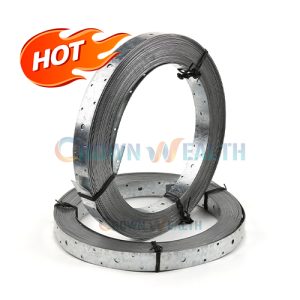
| Width | 12 mm, 17 mm, or 27 mm | Load, fastener size, and installation space |
| Surface | Silver galvanized or black spray finish | Coating thickness, adhesion, color, and corrosion test |
| Edge profile | Wavy edge or straight edge | Bend radius, handling, and contact surface |
| Perforation | Continuous pre-punched holes | Hole diameter, shape, spacing, and tolerance |
| Packaging | Paper box or plastic box options | Roll length, label, barcode, carton quantity, and pallet |
For an OEM order, send your width, thickness, roll length, hole pattern, edge design, coating, color, packaging, and annual quantity. As a result, your supplier can quote the correct material instead of making assumptions.
Where Can You Use Fixing Banding?
Cable and Wire Management
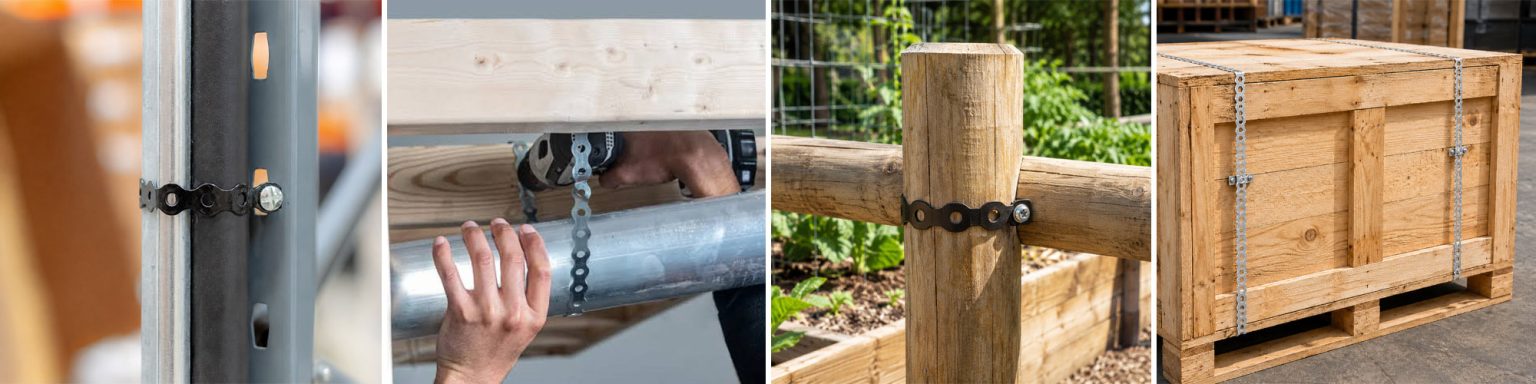
You can use fixing banding to organize or support cables where the approved design allows it. For example, you can form a custom loop or bracket around a pole, beam, or suitable structure. First, confirm the cable load and bend radius. Then, select a fastener that will not damage the cable or substrate.
Pipe, Conduit, and HVAC Support
In addition, you can form the strip around pipes, conduits, and ventilation components. The perforations help you adjust the loop diameter on site. However, you must design the support spacing and fasteners for the actual pipe weight, vibration, temperature, and building code.
Cargo Packaging and Pallet Reinforcement
You can wrap a wider band around crates, pallets, wood, or industrial components to reduce movement during handling. Nevertheless, fixing band does not replace certified cargo restraints. You should match the band, buckle or fastener, tension, and packaging method to your transport requirement.
Wood, Garden, and Agricultural Projects
For example, you can reinforce timber joints, fence elements, garden stakes, or light agricultural structures. Choose fasteners that suit the wood and environment. Also, protect workers from cut edges during installation.
How Do You Choose the Right Width?
12 mm Fixing Band
You can choose 12 mm when you need a narrow strip for light fastening, small cables, tight spaces, or compact packaging. Even so, check the required thickness and load before you approve it.
17 mm Fixing Band
The 17 mm option gives you a wider contact area and more room for larger holes or fasteners. Therefore, many buyers use it as a general-purpose size for cable, pipe, and construction work.
27 mm Fixing Band
You can select 27 mm when you need a wider band for larger components or heavier packaging. However, width does not define strength by itself. You must also confirm thickness, steel grade, hole pattern, fastener, and installation method.
Wavy Edge vs. Straight Edge
A wavy edge can help the band follow curved surfaces and may make handling easier in some applications. In contrast, a straight edge gives you a uniform width across the full strip.
Before you choose, consider:
- The diameter and shape of the item you will wrap
- The required contact area
- The band thickness and bendability
- The fastener and hole pattern
- The risk of sharp edges during cutting and handling
- Your customer’s drawing or market preference
For a distribution program, you may stock both profiles. This approach lets your customers choose the best fit without changing suppliers.
Silver Galvanized vs. Black Fixing Band
Silver galvanized band gives you the standard metallic finish and visible zinc protection. Meanwhile, black fixing band adds a dark spray coating over the galvanized base on the standard Hbcrownwealth option.
You may prefer black band for visible interiors, dark equipment, retail packaging, or architectural work. However, color alone does not prove corrosion performance. Ask for the coating specification, adhesion requirement, and test method when the environment demands higher protection.
How Can Fixing Band Reduce Your Project Costs?
You Can Stock Fewer Rigid Clamp Sizes
Because you can cut and form the strip on site, one roll can cover several diameters. Consequently, you can simplify inventory for maintenance and light custom fastening.
You Can Adjust the Length on Site
Pre-punched holes let your technicians select a connection point quickly. As a result, they can adapt the band without waiting for a custom rigid clamp.
You Can Improve Packaging Flexibility
With several widths and finishes, you can serve construction, logistics, retail, and industrial customers from one product family. In addition, custom labels and boxes can support your local brand.
You Can Plan Repeat Orders More Easily
When you fix the drawing, tolerances, and packaging, your supplier can repeat the same configuration. Therefore, you reduce variation between shipments.
Fixing Band vs. Galvanized Bracing Strap
Do not treat fixing band and structural bracing strap as the same product. You normally use fixing band for flexible fastening, support, packaging, or general maintenance. In contrast, you use galvanized steel bracing strap with holes for approved timber-frame support and structural reinforcement.
If the strap contributes to building stability, follow the structural drawing, fastener schedule, and local building code. Ask the engineer to approve the product dimensions and design capacity.
How Should You Install Galvanized Fixing Band?
- Confirm the load: Check the project drawing, support spacing, and fastener requirement.
- Measure the length: Allow enough overlap for the approved connection.
- Cut the band: Use the correct shears and wear cut-resistant gloves and eye protection.
- Control the edges: Remove dangerous burrs and avoid damaging the galvanized surface.
- Select the fastener: Match the screw, bolt, or nail to the hole and substrate.
- Form the band: Bend it smoothly without creating cracks or sharp kinks.
- Tighten the connection: Apply the specified torque or installation method.
- Inspect your work: Check alignment, coating damage, sharp edges, and movement.
Finally, replace any strip that shows cracks, severe deformation, damaged holes, or unacceptable corrosion.
What Should You Check During Quality Inspection?
A useful inspection plan helps you compare samples and control bulk orders. You can check:
- Width, thickness, and roll length
- Hole diameter, spacing, and alignment
- Edge profile and burr control
- Surface finish, color, and coating adhesion
- Steel grade or tensile performance when specified
- Flexibility and cracking after bending
- Roll consistency and winding quality
- Label, barcode, box, carton, and pallet details
For critical applications, add the required sampling level, test method, and acceptance criteria to your purchase order.
Why Should You Buy from Hbcrownwealth?
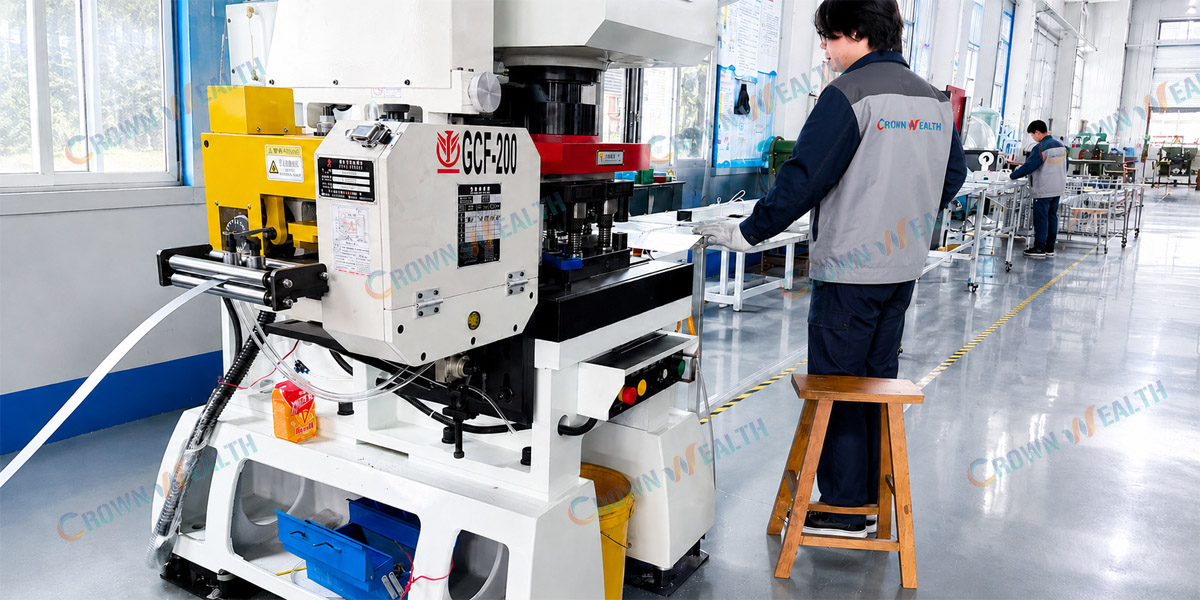
When you buy from Hbcrownwealth, you work with a manufacturer of galvanized steel fixing band, pole-line hardware, cable accessories, and construction connectors.
You can benefit from:
- 12 mm, 17 mm, and 27 mm standard widths
- Wavy-edge and straight-edge options
- Silver galvanized and black spray finishes
- Paper-box and plastic-box packaging
- OEM dimensions, hole patterns, colors, labels, and cartons
- Low-MOQ and bulk-order support
- Mixed-product container loading
- Export experience in more than 60 countries
To receive an accurate quote, send your drawing or target width, thickness, roll length, hole pattern, finish, packaging, quantity, and destination through our contact page.
Frequently Asked Questions
What can you use galvanized steel fixing band for?
You can use it for cable management, pipe or conduit support, cargo packaging, timber fastening, maintenance, and other approved light fastening tasks.
Which width should you choose?
Choose the width after you review the load, thickness, fastener, hole size, substrate, and available space. Hbcrownwealth offers 12 mm, 17 mm, and 27 mm standard widths.
Does black fixing band resist corrosion better than silver band?
The black spray layer adds another finish over the galvanized base. However, you should compare the coating specification and test results instead of judging performance by color.
Can you use fixing band for structural bracing?
Only when an engineer and the applicable building code approve the exact product and connection. For timber-frame reinforcement, use a specified structural bracing strap rather than a general-purpose fixing band.
Can Hbcrownwealth customize the holes and packaging?
Yes. You can request OEM width, thickness, roll length, hole pattern, edge profile, finish, color, label, barcode, box, carton, and pallet.
What information should you include in your RFQ?
Include the application, drawing, width, thickness, roll length, material, finish, hole dimensions, edge profile, load requirement, fastener, packaging, quantity, and destination.