English
 Spanish
 French
 Arabic
When you install an overhead service drop, a hot-dip galvanized house hook gives you a strong attachment point for drop wire clamps, dead-end clamps, and service cables. For example, you can mount the correct hook on a wooden pole, building wall, fascia, or another approved structure.
In addition, you can choose several hook profiles and finishes. Therefore, you should match the hook to your clamp bail, cable type, mounting surface, required dimensions, working load, and corrosion environment. In this guide, you can compare P house hooks with J drive hooks and prepare a more accurate purchase specification.
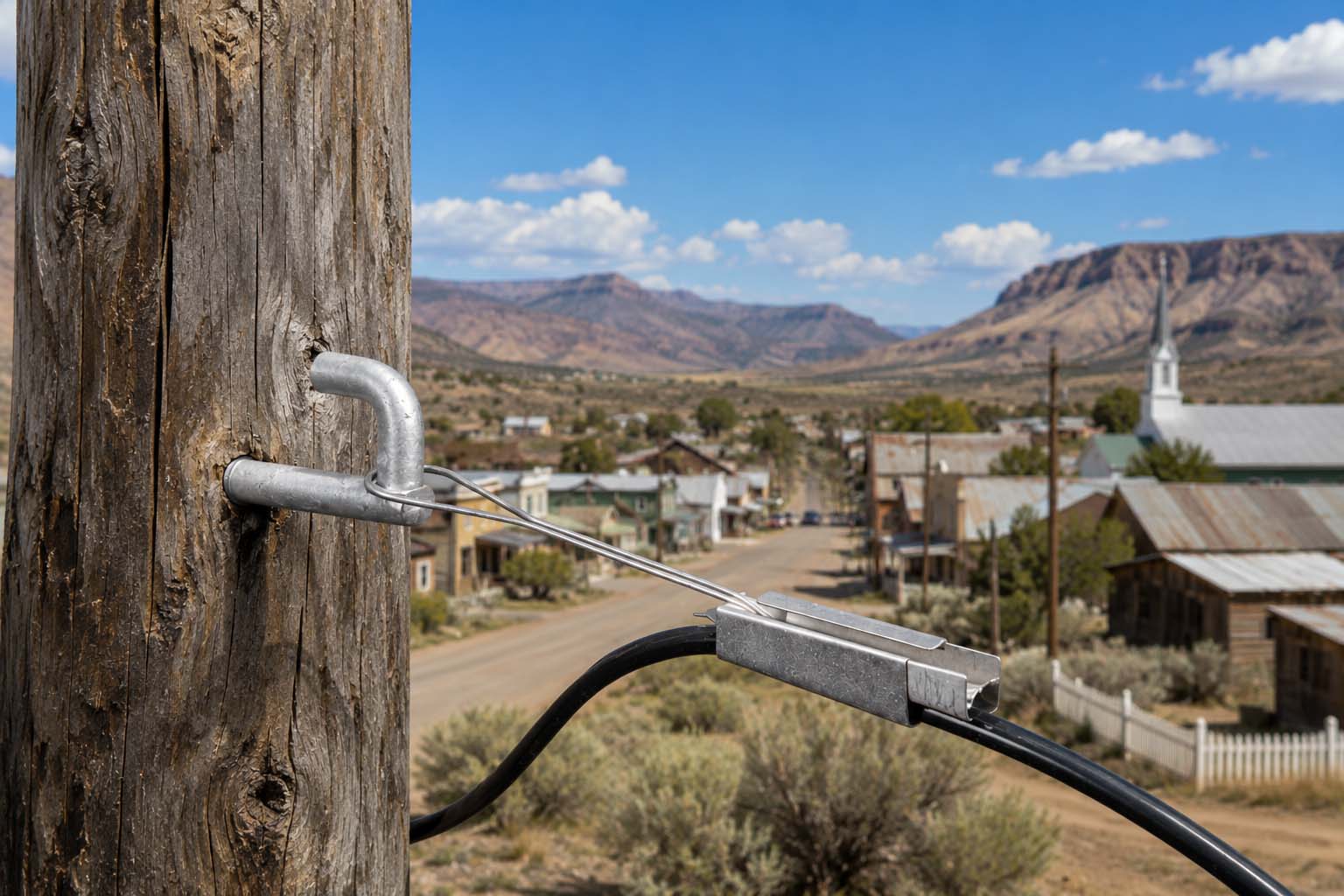
What Is a House Hook?
A house hook connects an aerial service cable to an approved pole or building structure. For example, depending on the profile, you can place the bail of a drop wire clamp inside the hook or attach a compatible dead-end clamp.
However, the hook forms only one part of the cable attachment. Before you order, check its size, thread, steel grade, coating, mounting depth, and clamp compatibility. You should also confirm that the complete attachment can carry the project load.
Where Can You Use House Hooks?
In practice, you can use house hooks in many last-mile cable projects, including:
- FTTH and FTTx subscriber drop connections
- CATV and telephone service drops
- Aerial broadband networks
- Low-voltage overhead service cables
- Wooden utility poles and approved timber structures
- Building facades, eaves, and exterior walls with suitable anchors
- Warehouses, workshops, and industrial buildings
Nevertheless, you should not use one fixing method for every surface. Concrete, masonry, steel, and timber need different attachment details. First, identify the substrate. Then, confirm the anchor method and allowable load.
Why Should You Choose a Hot-Dip Galvanized House Hook?
A hot-dip galvanized house hook uses a zinc coating that bonds to the steel surface. As a result, the coating helps your house hooks resist outdoor corrosion. Moreover, it protects complex hook shapes and threaded areas.
With the correct specification, you can gain several advantages:
- Reliable protection against rain and humidity
- A durable surface for handling and field installation
- Longer service life than uncoated carbon steel
- Lower routine maintenance requirements
- Compatibility with many outdoor telecom and utility projects
In addition, you should include the coating standard and minimum thickness in your purchase specification. Coastal or industrial sites may need a different material or extra corrosion protection.
P House Hook vs. J Drive Hook
In general, both designs support overhead drop cables. However, each model gives you a different shape, dimension range, material, and finish. Compare the project drawing before you select a hook.
| Item | P House Hook | J Drive Hook |
|---|---|---|
| Typical function | You can place a clamp bail in the closed eye or wrap the cable support wire around it. | You can connect a compatible drop wire clamp, dead-end clamp, or service drop to the open J profile. |
| Standard material | Hbcrownwealth uses AISI 1016 steel. | Hbcrownwealth uses AISI 1018 steel. |
| Standard finish | Hbcrownwealth mechanically galvanizes the standard model to ASTM B695 Class 50, Type 1. | Hbcrownwealth hot-dip galvanizes the standard model. |
| Standard dimensions | Send your drawing or required thread dimensions with the inquiry. | Choose a 5/16-inch or 7/16-inch diameter and a 3-1/2-inch or 4-3/4-inch length. |
| Installation detail | A knurled ring helps you control the driving depth. | The curved upward thread lets you wrench or drive the hook according to your installation procedure. |
Finish options can vary by model and order. Therefore, tell us if you need hot-dip galvanizing, a specific ASTM requirement, a minimum zinc thickness, or another finish.
P House Hook
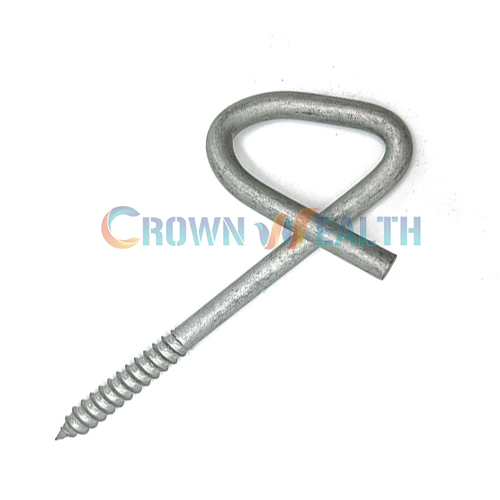
For example, the P house hook has a closed eye for a clamp bail or cable support wire. You can use it for CATV, telephone, and FTTH service drops. For the standard model, Hbcrownwealth forms AISI 1016 steel and applies a mechanical galvanized coating that meets ASTM B695 Class 50, Type 1.
J Drive Hook
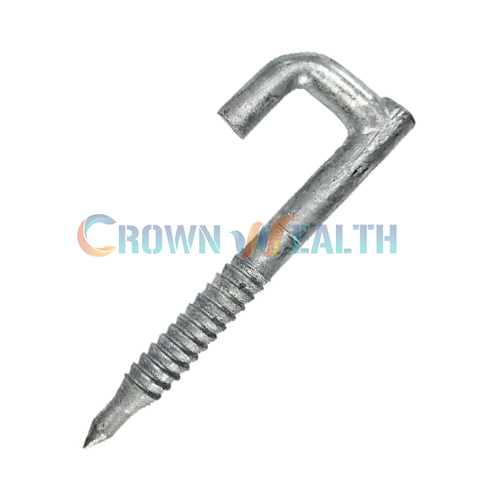
Meanwhile, the J drive hook gives you an open J-shaped connection for compatible aerial cable clamps. Hbcrownwealth makes the standard model from AISI 1018 steel and then hot-dip galvanizes it. You can choose a 5/16-inch or 7/16-inch diameter. Moreover, you can select a 3-1/2-inch or 4-3/4-inch length.
What Benefits Can House Hooks Bring to Your Project?
Reliable Cable Attachment
When you select the correct hook, you create a stable connection between the pole or building and the service-drop clamp. Consequently, you can control cable movement and maintain the planned route.
Fast Field Installation
A threaded hook can reduce the number of separate mounting parts on a suitable structure. Even so, you should follow the approved drawing for tools, pilot holes, and embedment depth.
Compatibility with Drop Hardware
You can pair house hooks with suitable drop wire clamps, wedge clamps, dead-end clamps, and other aerial drop hardware. Before installation, check the hook opening and clamp bail for a secure fit.
Outdoor Corrosion Protection
Similarly, a specified galvanized finish protects the steel from early rust. Therefore, you can extend the service life of the attachment under normal outdoor conditions. During installation, take care not to damage the coating.
Efficient Purchasing
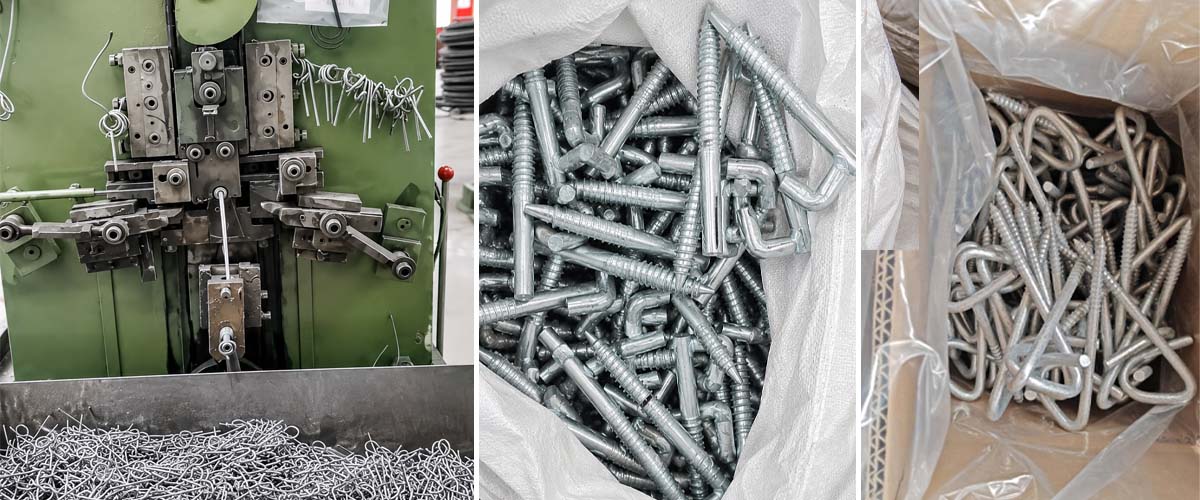
As a result, standard sizes make repeat orders easier. Meanwhile, OEM production lets you specify the hook shape, thread, length, steel grade, coating, marking, and packaging.
How Do You Select the Right House Hook?
1. Confirm Your Clamp and Cable
Start with the clamp model, bail dimensions, cable type, cable diameter, and expected tension. Make sure the hook accepts the clamp without binding or excessive movement.
2. Identify Your Mounting Surface
Next, tell your supplier whether you will mount the hook in timber, concrete, masonry, steel, or another structure. Choose a fixing detail that suits that substrate. For example, do not drive a timber hook directly into masonry.
3. Specify the Dimensions
Provide the rod diameter, overall length, threaded length, hook opening, and required driving-depth ring. For OEM orders, send a drawing with tolerances.
4. Define the Material and Finish
State the steel grade and coating requirement. You may need hot-dip galvanizing, mechanical galvanizing, electro-galvanizing, or another finish. Also include the coating standard and minimum thickness.
5. Set Your Mechanical Requirements
Give your supplier the working load, proof load, safety factor, and test method. Do not select a hook only by its physical size.
6. Confirm Packaging and Traceability
Finally, specify the carton quantity, pallet type, labels, barcodes, batch traceability, and inspection documents. These details help you receive stock that fits your warehouse and distribution process.
How Should You Install a House Hook?
- Use trained installers and follow the approved attachment drawing.
- Check the mounting surface before you start.
- Use the correct tool and control the installation depth.
- Avoid deforming the hook or damaging the galvanized coating.
- Seat the clamp bail correctly inside the hook opening.
- Maintain the required cable bend radius and electrical clearance.
- Inspect the finished attachment for looseness, cracks, corrosion, or interference.
Finally, your installer and network owner should define the final spacing, load limits, clearances, and acceptance criteria.
Why Should You Buy House Hooks from Hbcrownwealth?
When you choose Hbcrownwealth, you work directly with a manufacturer of house hooks and related pole-line hardware. We support distributors, telecom contractors, utilities, and infrastructure projects.
You can benefit from:
- P house hooks and hot-dip galvanized J drive hooks
- In-house steel forming, threading, galvanizing, and inspection
- OEM and ODM dimensions, finishes, markings, and packaging
- Low-MOQ and bulk-order support
- Mixed-product container loading
- Export experience in more than 60 countries
- Support for compatible clamps and aerial cable accessories
If you need a hot-dip galvanized house hook, send us your drawing, application, clamp model, dimensions, steel grade, coating requirement, test standard, quantity, and destination. You can submit these details through our contact page.
Frequently Asked Questions
What can you use a house hook for?
For example, you can use it to attach a drop wire clamp, dead-end clamp, or service-drop cable to an approved pole or building structure.
Are all house hooks hot-dip galvanized?
No. Hbcrownwealth hot-dip galvanizes the standard J drive hook. In contrast, we mechanically galvanize the standard P house hook to ASTM B695 Class 50, Type 1.
How does a P house hook differ from a J drive hook?
A P hook gives you a closed eye for a clamp bail or support wire. A J drive hook gives you an open J-shaped connection. In addition, the standard models use different steel grades, finishes, and dimensions.
Can you install a house hook in concrete or brick?
Yes, but you need a fixing system that suits the substrate and project load. Do not install a timber drive hook directly into masonry unless your approved design includes a compatible anchor.
What should you include in your RFQ?
Include the drawing, hook type, material, finish, coating standard, mechanical load, clamp model, mounting surface, quantity, packaging, and destination market.
Can Hbcrownwealth customize your house hooks?
Yes. We can customize the hook shape, rod diameter, length, thread, steel grade, finish, marking, test requirement, and packaging.