English
 Spanish
 French
 Arabic
People often confuse pole band clamps in daily life and electrical work.
In the following article, I will help you distinguish and become familiar with them from five different perspectives.
What Are Pole Band Clamps?
Pole band clamps, also called utility pole bands, pole clamps, pole fasteners, or utility pole band clamps, are metal fastening components that wrap around utility poles and provide attachment points for other pole line hardware.
Typically, a pole band consists of one or more formed steel sections connected with bolts and nuts.
Once you tighten the bolts, the band grips the pole and provides a stable mounting point.
Depending on the design, you can use pole band clamps to connect:
- Secondary racks
- Cable brackets
- Guy attachments
- Dead-end hardware
- ADSS and OPGW cable accessories
- Communication cable hardware
- Pole brackets
- Other overhead line fittings
Therefore, pole bands are widely used in both electrical distribution and telecommunications projects.
Use&Shape of Pole band clamps
Pole band clamps come in several structures. You should choose the type according to the hardware you need to mount and the direction of the applied load.
Single Offset Pole Bands
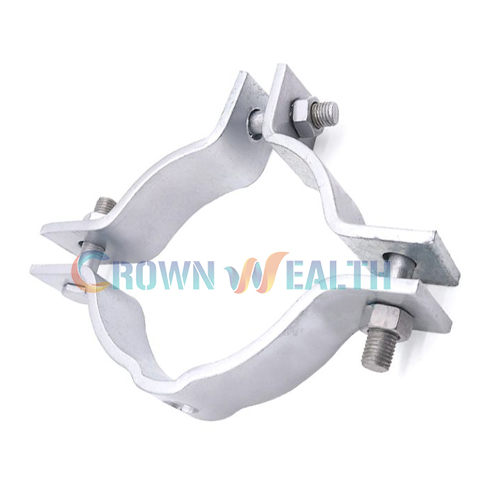
A single offset pole band provides an offset mounting point on one side of the pole.
You can use this design when your project requires an attachment point for a bracket, cable fitting, or other pole line component on one side.
Before selecting one, check the pole diameter and mounting-hole dimensions.
Double Offset Pole Bands

A double offset pole band provides mounting points that can accommodate different line configurations.
You can use it where the installation requires additional attachment positions or where your hardware arrangement places forces in more than one direction.
Because different projects use different offset dimensions and hole configurations, you should check the engineering drawing before ordering.
Adjustable Pole Bands
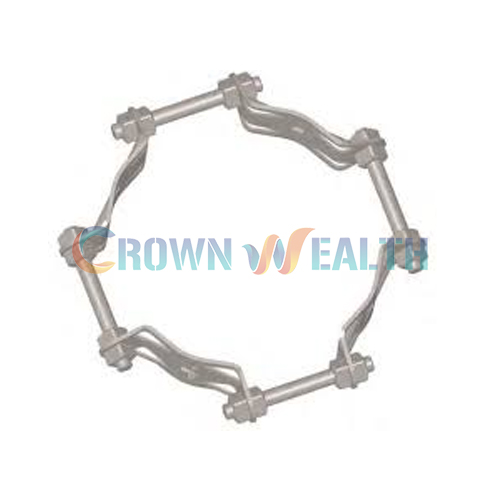
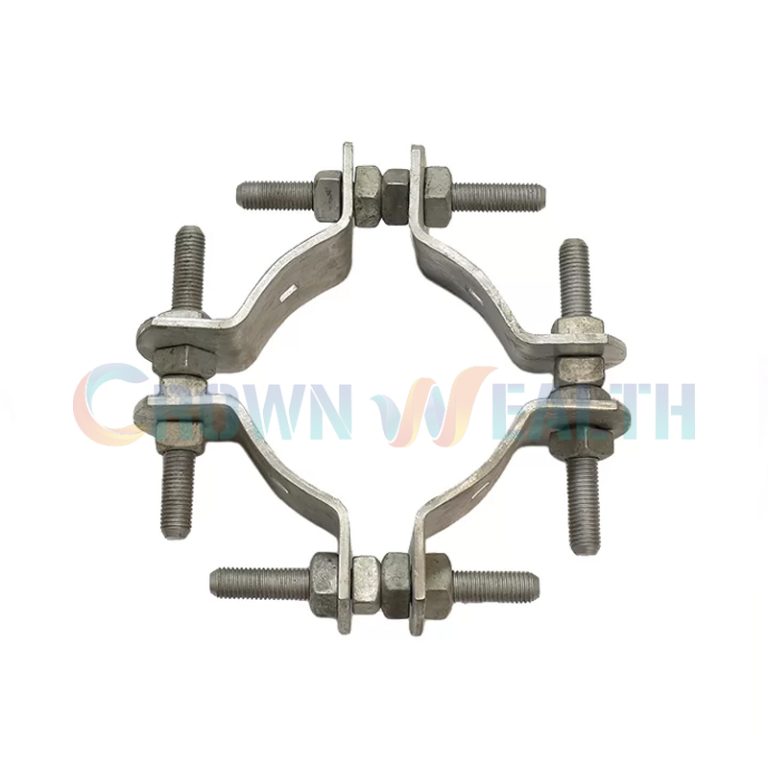
An adjustable pole band gives you more flexibility when your utility poles have different diameters.
Instead of purchasing a completely different fixed band for every pole size, you can select an adjustable design that covers a specified diameter range.
This can be particularly useful for distributors, contractors, and infrastructure projects that work with several pole sizes.
Utility Pole Band Clamps
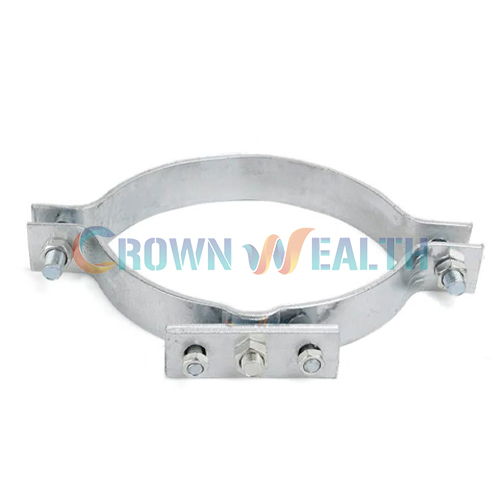
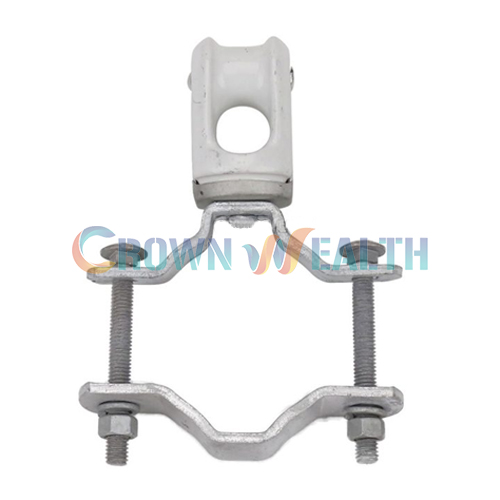
A standard utility pole band clamp typically consists of two formed steel halves connected by bolts.
You can use this type to mount secondary racks, brackets, and other utility hardware.
For example, Hbcrownwealth supplies utility pole band clamps in different pole diameter ranges for electrical and telecom applications.
Pole band clamps are different, they are used to connect to the hardware on the utility poles. They are heavy and have thick inner walls. You will see larger bolts and nuts as they appear.
Common products of pole band clamps include: adjustable pole bands, single and double offset pole bands, and drop wire mast brackets.
How to Choose Pole Band Clamps
When you choose pole band clamps, do not make your decision based only on appearance or price.
Instead, check the following factors.
1. Measure the Pole Diameter
Start with the outside diameter of the utility pole at the exact installation position.
This is especially important because many utility poles taper. Therefore, the diameter near the top of the pole may be different from the diameter closer to the bottom.
If your pole band is too large, you may not achieve a secure grip.
On the other hand, if the band is too small, you may not be able to close and bolt it correctly.
Therefore, provide your supplier with the actual pole diameter at the mounting height.
2. Identify the Pole Type
Next, tell your supplier what type of pole you use.
Pole band clamps can be used on many:
- Wooden utility poles
- Concrete poles
- Steel poles
- Telecom poles
- Distribution poles
However, pole shape, diameter, surface condition, and project design can affect your final selection.
For example, a round steel pole and a concrete pole may require different dimensional considerations.
3. Select the Correct Pole Band Type
After you confirm the pole diameter, identify what you want to attach to the pole.
Ask yourself:
Do you need to mount a secondary rack?
Do you need an attachment point for cable hardware?
Do you need a single or double mounting position?
Do you require an adjustable band?
The answer will help you choose between a single offset, double offset, adjustable, or other utility pole band design.
How to Install Pole Band clamps?
Step 1: Prepare the necessary tools or equipment, such as pliers and wrenches.
Step 2: Choose the Right Size Pole Band Clamp.
Step 3:Remove the bolts, put the pole band clamp on the utility pole, and tighten the bolts and nuts again.
Why Choose Hbcrownwealth Pole Band Clamps?
When you source pole band clamps for power distribution, telecom infrastructure, or overhead cable projects, consistent dimensions and manufacturing quality matter.
Hbcrownwealth manufactures and supplies different types of pole bands, including single offset pole bands, double offset pole bands, adjustable pole bands, and utility pole band clamps.
You can select different pole diameter ranges and mounting configurations according to your project.
In addition, Hbcrownwealth manufactures related pole line hardware, which allows you to check the compatibility between pole bands, brackets, bolts, cable hardware, and other components before ordering.
For OEM and project orders, you can provide your drawing, dimensions, sample, or technical specifications for customized production.
Frequently Asked Questions
What are the Pole Band clamps?
Pole band clamps are a type of hardware used to secure pole fittings.
Where can I buy the best pole band clamps?

Hebei Crownwealth is a professional manufacturer & supplier in the production and sale of clamps. It has international certification and is a well-known brand sold all over the world. We accept customization of clamp tools and will provide you with a timely quotation. If you want to buy, please contact us in time.