English
 Spanish
 French
 Arabic
Choosing the right drop wire clamp manufacturer is more than a purchasing task. It is a technical decision that affects your cable safety, installation speed, project budget, and long-term network reliability. The best supplier does not simply sell you a clamp. Instead, it helps you match the correct material, design, and specification to your actual project.
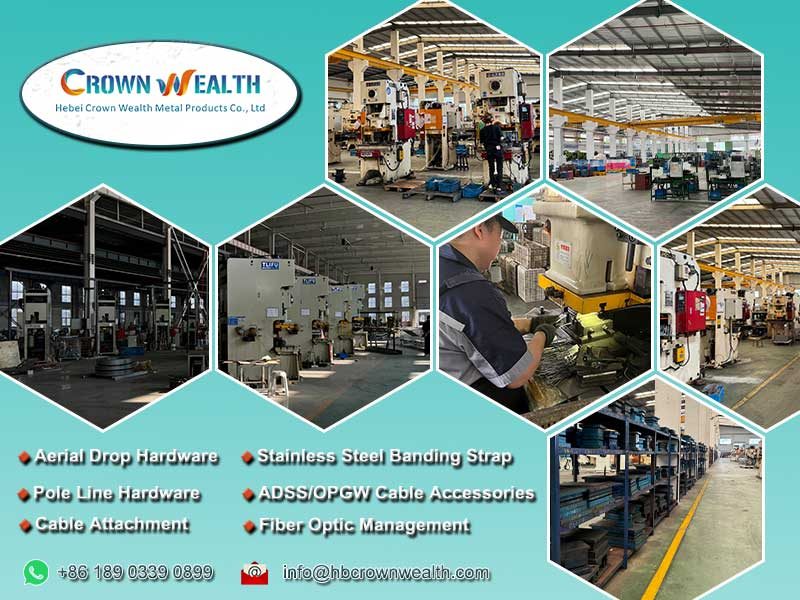
Hbcrownwealth is a professional drop wire clamp manufacturer, supplier, and wholesaler in China. We supply overseas distributors, electric power companies, telecommunication companies, and infrastructure projects with reliable aerial drop hardware. In this guide, you will learn how to compare plastic, stainless steel, and aluminum drop wire clamps, and how to choose a manufacturer that can protect your investment.
Why the Material Decision Comes First
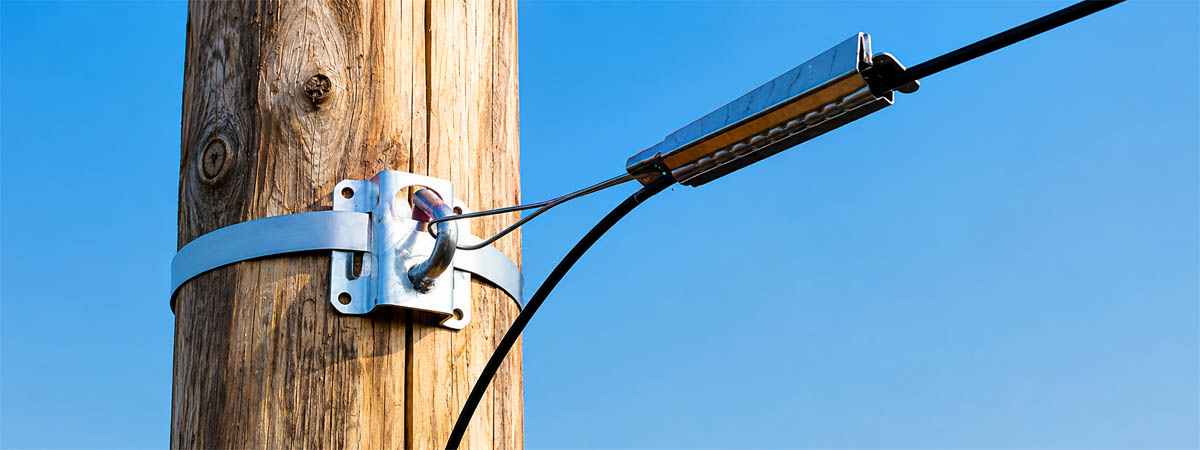
A drop wire clamp, also called a drop cable clamp or drop line clamp, secures aerial cables between utility poles, brackets, hooks, and buildings. It supports FTTH drop cables, telephone drop wires, CATV cables, and lightweight communication cables.
First, decide what the clamp must do in your installation. It should hold the cable firmly, transfer tension to the supporting structure, and protect the cable jacket from crushing. After that, choose a material that suits the environment, cable type, and load.
The material affects several important things:
- Mechanical strength and gripping ability
- Corrosion resistance in coastal, industrial, and humid areas
- UV and temperature resistance for long outdoor service
- Weight and ease of installation
- Electrical insulation or conductivity
- Product cost and total project budget
When you understand these factors, you can compare suppliers with confidence.
Plastic Drop Wire Clamps for Lightweight Access Networks
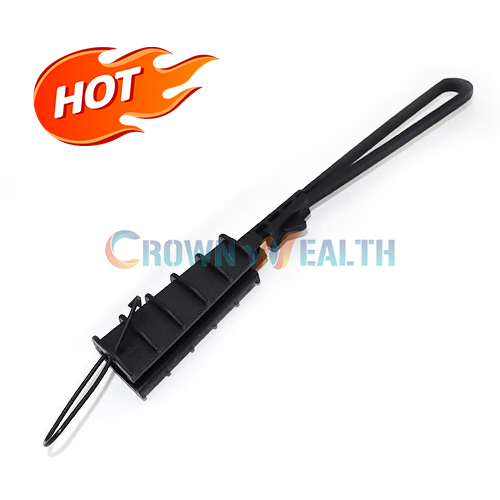
Plastic drop wire clamps are a smart choice for FTTH and modern fiber access networks. They use UV-resistant engineering plastic that can handle sunlight, rain, and temperature changes without becoming brittle.
You should consider a plastic drop wire clamp when you need:
- A lightweight product for pole-to-building fiber drops
- Electrical insulation around the cable
- Corrosion-free performance in normal outdoor conditions
- An economical solution for large FTTH and CATV projects
- Fast installation with a simple wedge or hook design
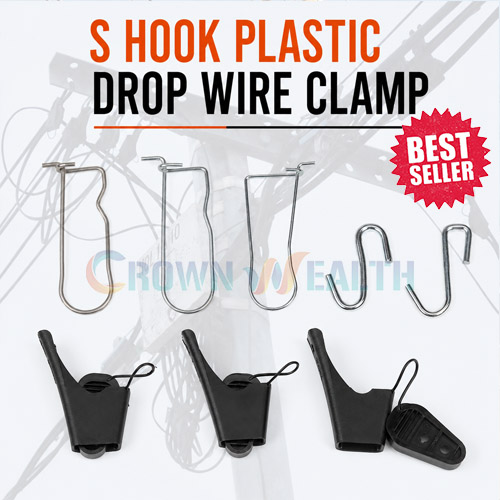
For flat fiber drop cables with an FRP reinforcing core, a plastic clamp with a wide slot helps you avoid crushing the cable. Many designs also use a stainless steel S-hook or mounting hook, so you still get a strong metal connection point.
However, not all plastic is the same. Ask your drop wire clamp supplier about UV stabilizers, operating temperature range, and impact resistance. A low-quality plastic clamp can look fine at first, but it may crack after months of strong sunlight or extreme cold.
Stainless Steel Drop Wire Clamps for Harsh Environments
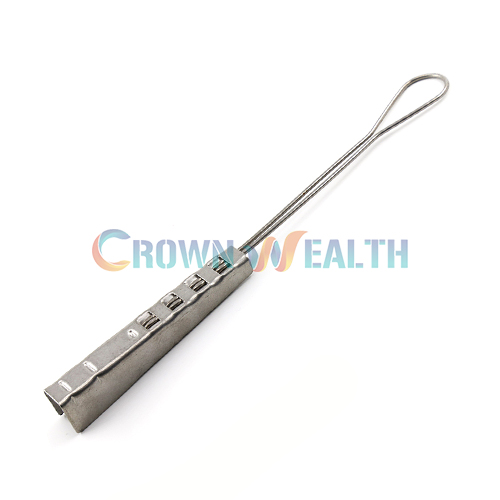
Stainless steel drop wire clamps provide the highest level of protection in demanding outdoor conditions. They are ideal for coastal areas, high-humidity regions, industrial zones, and projects where you need strong mechanical performance over many years.
Choose a stainless steel drop wire clamp when your project includes:
- High salt exposure near the sea
- Frequent rain, fog, or high humidity
- Heavy telephone or CATV drop wires that need stronger support
- Long service life with low replacement frequency
- Repeated installation, removal, and reuse
Most stainless steel models use 304 or 201 stainless steel bodies with dimpled or serrated shims to improve grip. For extremely corrosive sites, you can ask about higher-grade stainless steel and confirm the salt spray test results.
Remember that stainless steel costs more than plastic. However, you should compare the total cost over the project life, not just the unit price. A clamp that lasts longer and protects your cable often saves more money than a cheaper product that fails early.
Aluminum Alloy Drop Wire Clamps for Strength and Value
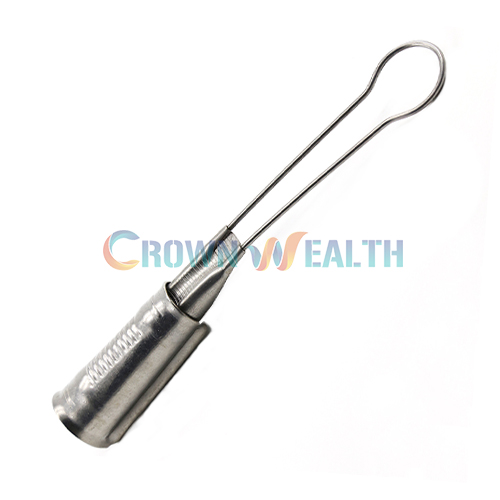
Aluminum alloy drop wire clamps offer a useful balance between strength, weight, and corrosion resistance. They are commonly used for telephone drop wires, CATV cables, and communication projects where you need a metal clamp without the extra weight of a full steel design.
You should consider aluminum alloy when you need:
- A stronger metal body than plastic
- A lighter product than stainless steel for transport and installation
- Good resistance to outdoor corrosion
- A practical option for 1-2 pair and 6 pair telephone drop wires
- Reliable gripping with dimpled, serrated, or plastic shims
Aluminum clamps give you a professional feel and dependable holding force. When you source them from a manufacturer, ask about the specific alloy, surface treatment, and how the clamp protects the cable insulation.
How to Compare Drop Wire Clamp Materials
You can use this simple comparison to guide your first discussion with a manufacturer:
| Material | Best For | Main Advantage | Key Point to Check |
|---|---|---|---|
| Plastic | FTTH, fiber drops, CATV | Lightweight, insulating, corrosion-free | UV resistance and temperature range |
| Stainless Steel | Coastal and high-load areas | Strength plus corrosion resistance | Grade, shim type, and salt spray data |
| Aluminum Alloy | Telephone, CATV, power and telecom projects | Strong but lightweight | Cable compatibility and grip surface |
No single material is best for every market. A professional drop wire clamp manufacturer should explain the options and help you choose by application, not just by price.
Match the Clamp Design to Your Cable and Installation Method
After you choose a material, you still need the correct clamp design. Cable shape and size determine whether you use a plastic flat clamp, a round wedge clamp, or a metal clamp for telephone drop wires.
First, identify your cable type. Flat fiber drop cables, round fiber cables, figure-8 cables, and traditional telephone drop wires all need different clamping surfaces. Next, check the cable diameter or pair count. For example, a 1-2 pair telephone drop wire and a 6 pair drop wire may require different body sizes. After that, consider whether your team prefers a compression design or a wire-wrap design.
A compression drop wire clamp uses a shell and wedge mechanism. You insert the cable, pull the wedge into position, and the clamp locks firmly. A wire-wrap clamp lets you wrap the cable into the groove without inserting it through a shell. Both methods can protect the insulation when the supplier uses the right shim and correct cable range.
Ask your supplier how the clamp holds different cables. Some designs use dimpled shims, some use serrated shims, and some use plastic or rubber inserts. The right shim helps prevent slipping without crushing the cable jacket.
What to Check Before You Trust a Drop Wire Clamp Manufacturer
Price alone will not tell you whether a factory can deliver consistent quality. Use these checks before you place a large order:
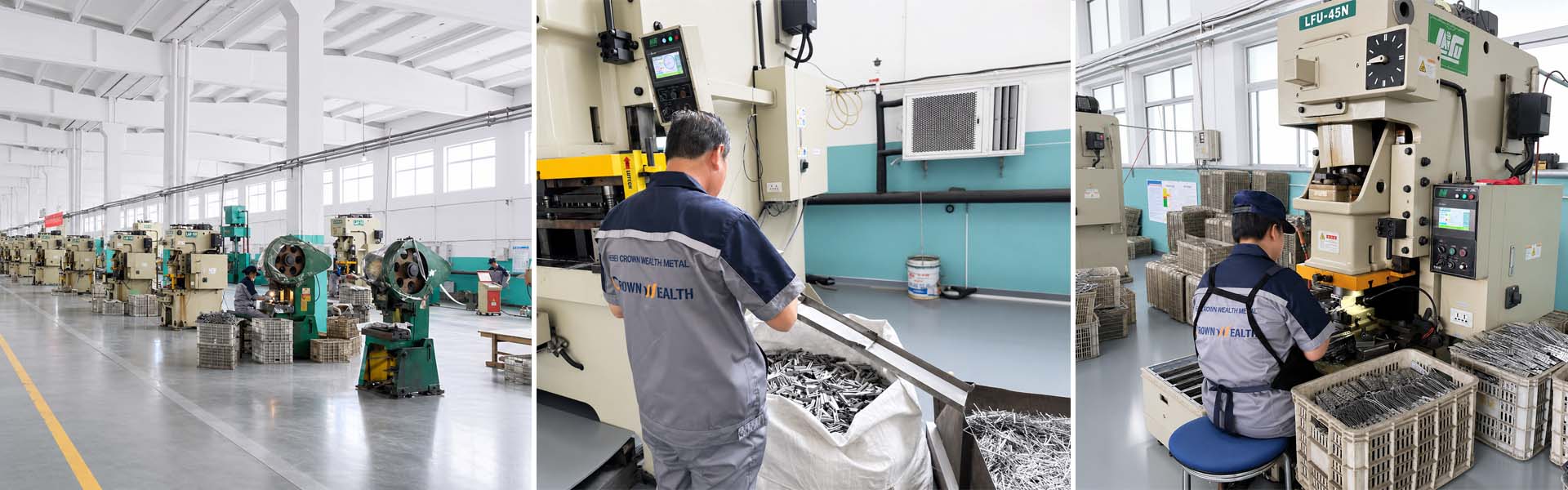
- Ask if the manufacturer produces the clamps in-house. Real factories can show molding, stamping, assembly, and quality control areas.
- Request material information. Confirm the plastic grade, stainless steel grade, and aluminum alloy used for each model.
- Ask about test methods. Useful checks include tensile load, salt spray, UV aging, and dimensional inspection.
- Order samples and test them with your actual cable. A sample fitting test tells you more than a catalog photo.
- Check whether the supplier can provide specifications, drawings, load data, and packaging details.
- Ask how the factory controls batch quality. Consistent dimensions matter when you reorder the same model later.
A strong manufacturer will welcome these questions. If a supplier cannot explain its materials or testing, you should treat that as a warning sign.
Think Like a Buyer: Distribution, Project, and OEM Needs
Your buying goals change how you should work with a drop wire clamp manufacturer.
If you are a distributor, you need a broad product range, stable supply, clear packaging, and flexible wholesale terms. Ask about mixed cartons, popular SKUs, and private label options.
If you work for a power or telecommunication company, you need consistent specifications, test reports, and reliable delivery for projects. Share your cable data, span length, and environmental conditions so the supplier can recommend the correct model.
If you are a contractor or installer, you need products that are easy to handle and install. Ask about clamp weight, tool-free installation, and whether the clamp is removable and reusable.
If you plan to build your own brand, ask about OEM and ODM support. A professional factory can customize logos, carton printing, labels, packaging, and some product dimensions for your market.
Hbcrownwealth: A Professional Drop Wire Clamp Manufacturer and Supplier
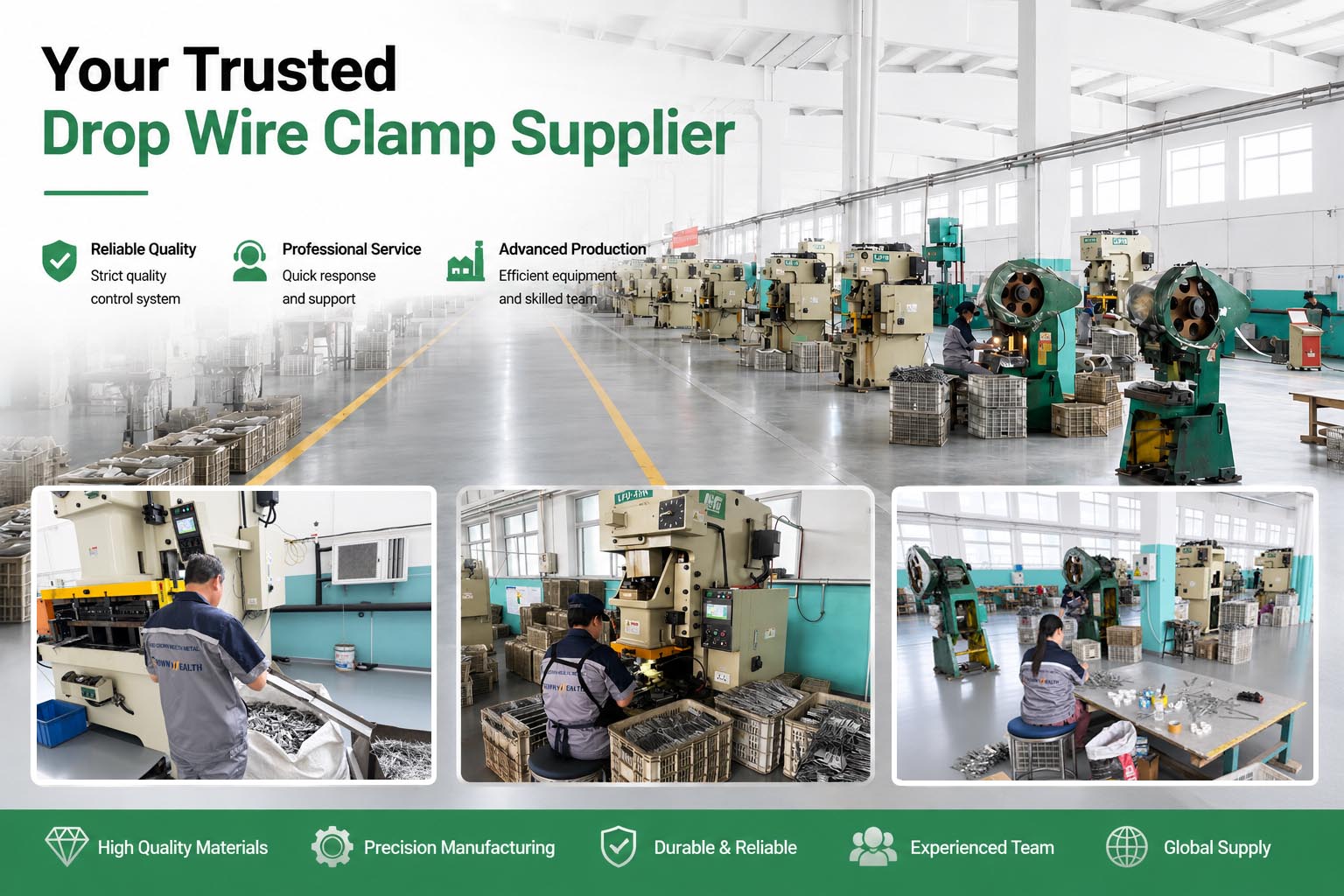
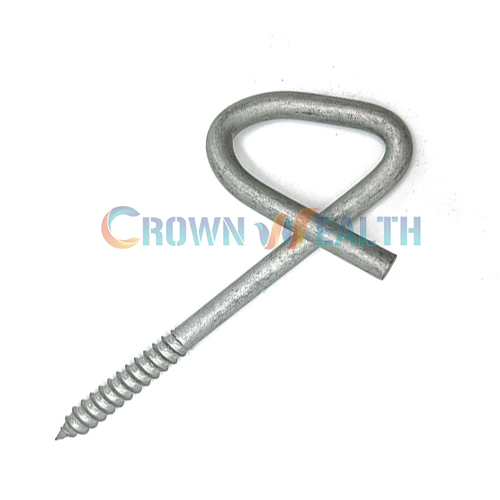
At Hbcrownwealth, we manufacture drop wire clamps in plastic, stainless steel, and aluminum alloy for FTTH, CATV, telephone, and utility applications. We also supply related aerial drop hardware, including S-hooks, drive rings, brackets, anchoring clamps, and span clamps.
When you work with us, you buy directly from the production source. Our factory controls material selection, molding, stamping, assembly, inspection, and packaging. We support overseas distributors, wholesalers, power companies, telecommunication companies, and project contractors with bulk orders, OEM/ODM projects, and private label packaging.
Browse our complete drop wire clamp product range to see the materials and models we supply.
Drop Wire Clamp Supplier Checklist Before You Order
- Confirm your cable type, diameter, and pair count before requesting a quote.
- Choose plastic, stainless steel, or aluminum alloy based on the environment and load.
- Check UV resistance, salt spray performance, and temperature range.
- Ask whether the clamp uses a compression, wire-wrap, or hook installation design.
- Order samples and test them with your actual cable.
- Request specifications, drawings, and test reports.
- Confirm OEM, ODM, packaging, and private label services.
- Agree on minimum order quantity, lead time, and delivery terms.
- Combine drop wire clamps with other aerial hardware in one order when possible.
- Start with a pilot order before you commit to a large project quantity.
Frequently Asked Questions
Which material should I choose for FTTH drop cable?
Plastic drop wire clamps are usually the best starting point for FTTH projects because they are lightweight, electrically insulating, and resistant to normal outdoor corrosion. For very harsh coastal conditions, you can use a stainless steel hook or mounting part with the plastic clamp body.
How can I test a drop wire clamp sample?
Place the sample on the actual cable you plan to use, pull it gently, and check whether the cable stays secure without visible jacket damage. You can also ask the manufacturer for tensile load, salt spray, and UV aging test data.
Can I combine drop wire clamps with other aerial hardware?
Yes. Distributors and project buyers often combine drop wire clamps with S-hooks, brackets, drive rings, anchoring clamps, and span clamps in one shipment. A full-range supplier makes purchasing and installation easier.
Does Hbcrownwealth support private label and OEM orders?
Yes. Hbcrownwealth supports OEM, ODM, private labels, custom packaging, and logo marking. Share your target market and product specification, and we will help you plan a suitable order.