English
 Spanish
 French
 Arabic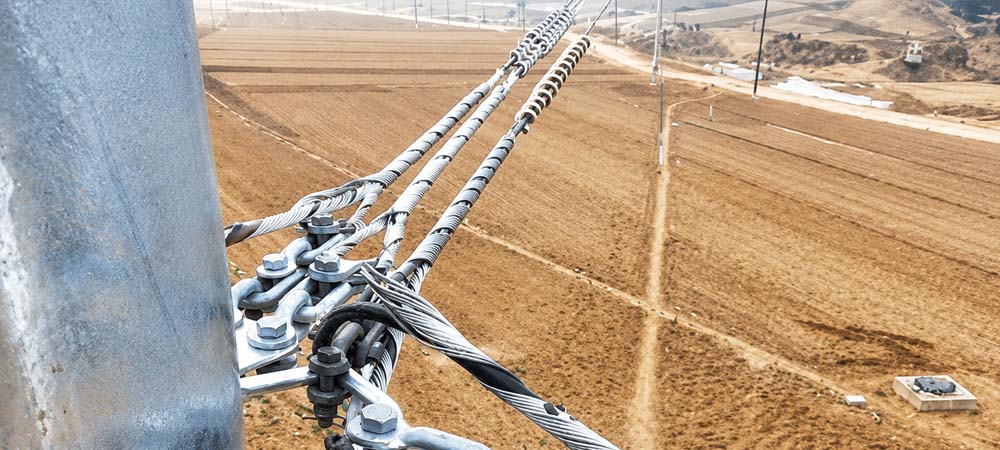
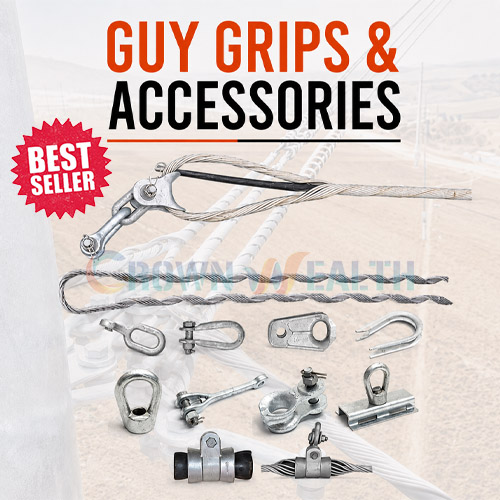
When you purchase guy grips for an overhead power, telecommunications, utility pole, ADSS, or fiber optic project, you should not select a model based only on appearance or price.
Cable diameter, wire construction, required mechanical load, material, corrosion protection, installation environment, and compatible pole line hardware all affect your final choice.
Choosing the correct specification helps you improve installation reliability, reduce unnecessary maintenance, and build a more consistent overhead line system.
Hbcrownwealth is a professional guy grip manufacturer and wholesaler in China, supplying standard and customized preformed guy grips for distributors, contractors, utilities, telecom companies, and infrastructure projects worldwide.
Quick Answer
To choose the right guy grip, first confirm your wire or cable type, outside diameter, required tensile load, application, attachment hardware, and installation environment.
You should then match these requirements with the grip diameter range, material, length, holding performance, loop configuration, and corrosion protection.
For bulk purchasing or project applications, send your technical specifications to the manufacturer before ordering. A professional supplier can help you select or customize a suitable guy grip instead of relying only on a general size chart.
What Information Should You Provide Before Choosing a Guy Grip?
The fastest way to select a suitable guy grip is to start with your project data.
Before requesting a quotation, prepare the following information:
| Project Information | Why It Matters |
|---|---|
| Wire or cable type | Determines the correct grip structure |
| Outside diameter | Helps match the grip diameter range |
| Wire construction | Influences gripping performance |
| Required tensile load | Determines mechanical requirements |
| Rated breaking strength | Helps evaluate required holding performance |
| Application | Guy wire, ADSS, OPGW, conductor or other use |
| Span or installation condition | Helps determine the required configuration |
| Environment | Influences material and corrosion protection |
| Connection hardware | Ensures the loop fits compatible fittings |
| Required quantity | Helps plan production and packaging |
| Technical standard or drawing | Supports project-specific manufacturing |
The more complete your information is, the easier it becomes for your supplier to recommend the correct specification.
1. Match the Guy Grip to the Wire or Cable Diameter
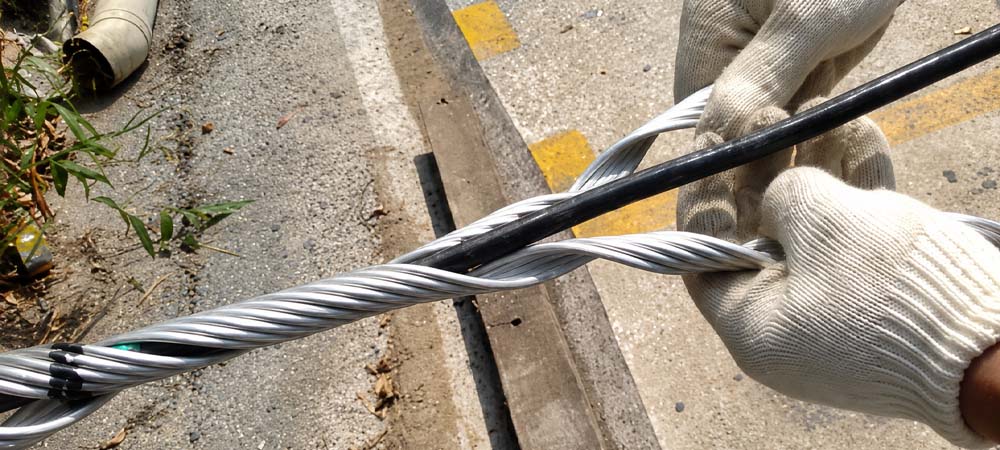
Cable or wire diameter should be one of the first specifications you check.
A preformed guy grip is manufactured for a defined diameter range. Therefore, you should never assume that two visually similar grips will work with the same wire.
For example, Hbcrownwealth supplies different guy grip sizes for different cable diameter ranges.
When you send an inquiry, provide the actual outside diameter in millimeters or inches instead of simply stating that you need a “standard guy grip.”
This small step can prevent many selection problems.
You should also confirm whether your project uses:
- Guy wire
- Stay wire
- Ground wire
- Messenger wire
- ADSS cable
- OPGW cable
- Conductor
- Other stranded wire
Different cable structures can require different preformed designs even when their outside diameters appear similar.
2. Check the Required Mechanical Load
Diameter alone is not enough.
You also need to understand the mechanical load that the termination point must carry.
Before purchasing, check the required:
- Tensile load
- Rated breaking strength
- Holding strength
- Working load
- Safety requirement specified by your project
For critical power and telecommunications projects, you should provide your supplier with the required mechanical performance instead of choosing a product only because its dimensions fit the cable.
This becomes particularly important at:
- Dead-end poles
- Corner poles
- Utility pole guying points
- Long-span sections
- High-wind areas
- Tension sections
- Important network termination points
A professional guy grip manufacturer should evaluate both dimensional compatibility and mechanical requirements.
3. Select the Right Material for Your Environment

Your installation environment directly affects product life.
For normal outdoor projects, galvanized steel and other corrosion-resistant metallic materials are commonly used. However, more demanding environments may require additional consideration.
You should pay particular attention when your project is located in:
- Coastal regions
- High-humidity areas
- Tropical climates
- Areas with frequent rainfall
- Industrial environments
- High-temperature regions
- Cold regions
- Locations exposed to strong wind or dust
For example, a coastal telecommunications project may place greater importance on corrosion protection than an inland project with a relatively dry climate.
Therefore, do not simply ask:
“How much is your guy grip?”
Instead, tell your supplier where and how you will use it.
That information helps the manufacturer recommend a more suitable material or surface treatment.
4. Check the Grip Length and Preformed Structure
Two guy grips designed for similar diameter ranges may still have different lengths and configurations.
Grip length affects the contact area between the preformed rods and the wire or cable.
Therefore, when you compare suppliers, check:
- Overall length
- Number of rods
- Helical forming consistency
- Diameter range
- Loop configuration
- Surface condition
- Grip coating or abrasive material
- Color identification
You should also check whether the product maintains a consistent preformed shape.
For large-volume orders, dimensional consistency becomes especially important because installers need every piece to perform in the same way.
A reliable factory should control forming dimensions during production rather than depending only on final visual inspection.
5. Match the Guy Grip with Compatible Pole Line Hardware
A guy grip does not work alone.
You usually need to connect it with other components within the complete overhead line system.
Depending on your project, these components may include:
- Stay rods
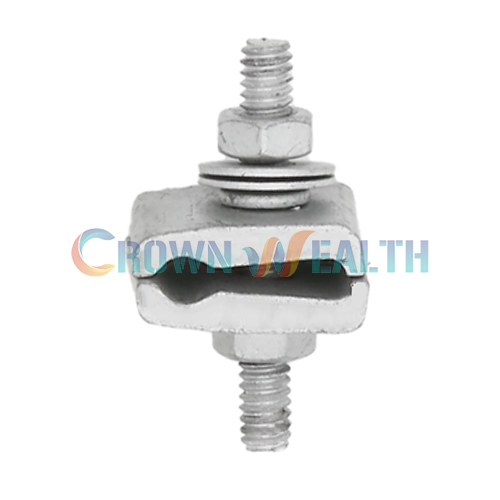
- Anchor clamps
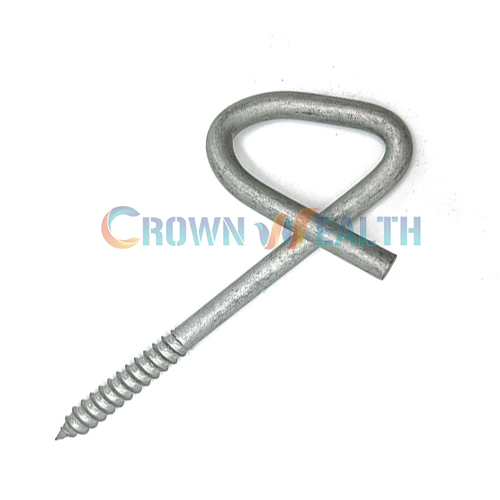
- Eye bolts
- Thimble eye bolts
- Pole brackets
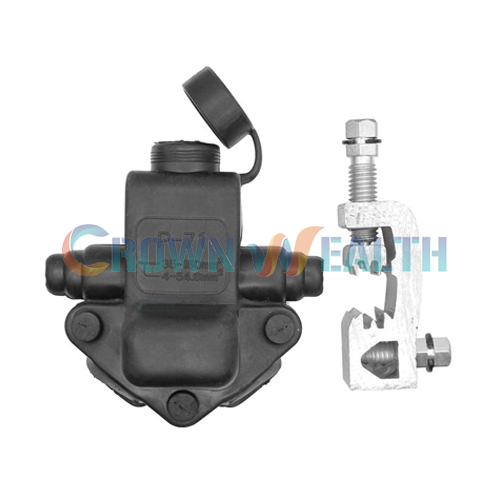
- drop wire clamps
- Guy attachments
- Pole bands
- Cross arms
- Other pole line hardware
Therefore, you should check the complete connection rather than purchasing each component independently without considering compatibility.
If you source several types of hardware from the same manufacturer, you can also simplify:
- Specification matching
- Quality control
- Packaging
- Inventory management
- Shipping
- Project procurement
You can explore additional pole line hardware applications to understand how different components work together in an overhead network.
6. Choose the Guy Grip According to the Application
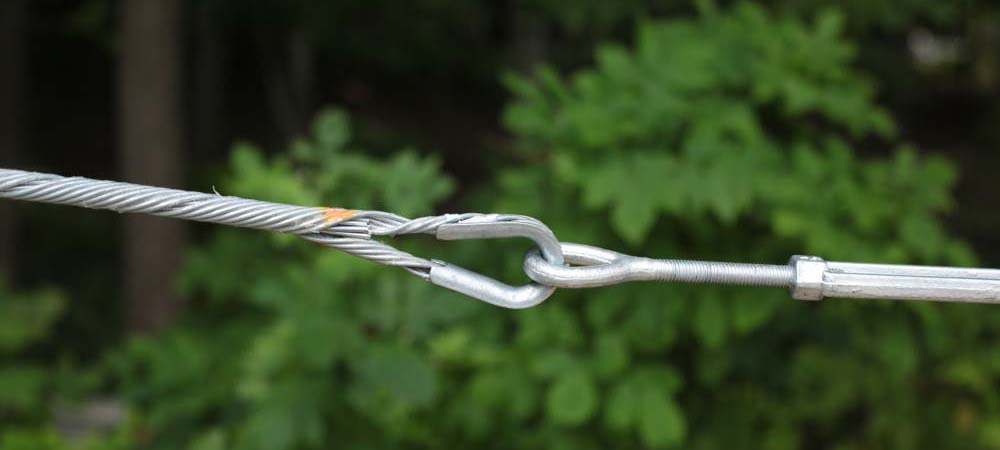
Your project application should determine the product configuration.
Utility Pole Guying
When you use guy grips with stay wire or guy wire to stabilize utility poles, you should focus on wire compatibility, mechanical holding performance, environmental resistance, and connection with the anchor system.
Overhead Power Lines
For power distribution and transmission applications, you should confirm conductor or strand specifications, mechanical requirements, project standards, and compatible fittings.
Telecommunications Networks
Telecommunication infrastructure often requires reliable hardware that installers can handle efficiently in the field.
For large networks, consistent dimensions and easy identification can also simplify installation and inventory management.
ADSS Cable Projects
ADSS cable applications require more careful cable matching.
You should provide:
- ADSS cable diameter
- Cable structure
- Rated tensile strength
- Span
- Required holding load
- Installation location
You can also review Hbcrownwealth’s preformed tension clamp solutions for ADSS and related aerial cable applications.
For specific projects, the CW-GUYTA Preformed Guy Grip Tension Clamp provides another reference for available specifications.
7. Consider Installation Conditions Before Ordering
Good product selection should also consider the installer.
For projects involving hundreds or thousands of poles, installation efficiency can have a significant effect on total project cost.
Before ordering, ask:
- Does the grip require special installation tools?
- Can installers identify different sizes easily?
- Is the correct installation direction clear?
- Does the grip match the intended thimble or attachment point?
- Can the product be installed consistently in the field?
- Does the supplier provide installation information?
You should not focus only on the purchase price per unit.
A slightly cheaper product can become expensive if installers struggle with inconsistent dimensions, incorrect sizing, or incompatible hardware.
8. What Should You Check When Comparing Guy Grip Suppliers?
When sourcing internationally, price is only one part of the purchasing decision.
You should also evaluate whether your guy grip supplier can consistently manufacture the specifications required by your market.
Before placing a bulk order, consider the following points.
Manufacturing Capability
Ask whether the supplier manufactures the guy grips directly or only resells standard products.
A manufacturer gives you more flexibility when you need customized dimensions or project specifications.
Product Range
A wider range makes it easier for you to cover different cable and wire sizes without managing too many suppliers.
Customization
For special projects, you may need to customize:
- Diameter range
- Product length
- Material
- Loop configuration
- Color identification
- Packaging
- Label
- OEM branding
Quality Inspection
Ask your supplier how they control:
- Raw materials
- Product dimensions
- Preformed shape
- Surface quality
- Mechanical performance
- Packaging
For project orders, you can also request relevant inspection or test documentation according to your purchasing requirements.
Production Consistency
Consistency becomes increasingly important when you purchase large quantities.
Your first shipment and your repeat orders should follow the same agreed specifications.
Export and Packaging Experience
If you are an overseas distributor or project buyer, your supplier should also understand export packaging, palletizing, labeling, mixed shipments, and international transportation requirements.
9. Should You Request Samples Before a Bulk Order?
Yes, especially when you are developing a new supplier or introducing a new specification.
Samples allow you to confirm:
- Diameter matching
- Product dimensions
- Surface treatment
- Installation fit
- Connection with existing hardware
- Packaging
- General workmanship
For engineering projects, you can also perform your own installation or mechanical verification according to the project’s technical requirements.
Sample approval creates a clearer reference before mass production begins.
10. Buying Guy Grips for Distribution and Wholesale
If you are a distributor or wholesaler, your purchasing priorities may differ slightly from those of a single engineering project.
You normally need to balance:
- Popular sizes
- Inventory turnover
- Market applications
- Packaging
- Competitive pricing
- Product consistency
- OEM requirements
- Repeat-order availability
Instead of purchasing only one specification, you may want to build a product range that covers the common requirements of your local power, telecommunications, and utility customers.
Hbcrownwealth can support standard products as well as customized specifications, helping you build a broader guy grip product portfolio for your target market.
Buyer Checklist: What to Send Your Guy Grip Manufacturer
Before requesting a quotation, send as much of the following information as possible:
- Wire or cable type
- Outside diameter
- Wire construction
- Required tensile or breaking strength
- Application
- Span or installation condition
- Environmental conditions
- Required material or coating
- Connection hardware
- Drawing or technical specification
- Required quantity
- Packaging requirements
- Applicable project standard
- Destination market or country
If you provide these details at the beginning, your manufacturer can respond more accurately and reduce unnecessary back-and-forth communication.
Choose Hbcrownwealth as Your Guy Grip Manufacturer in China
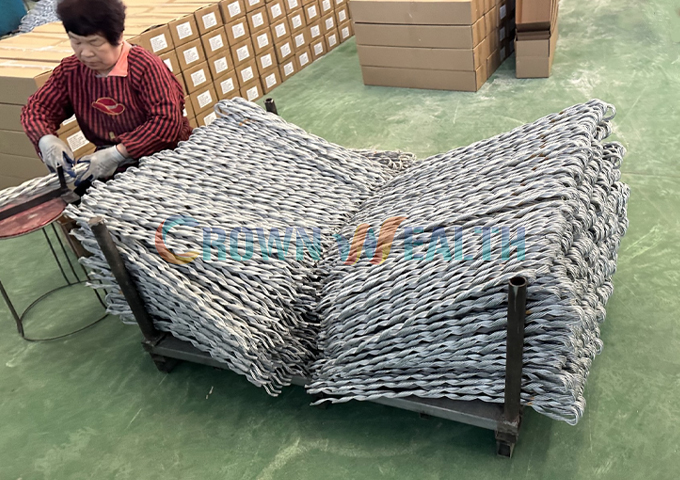
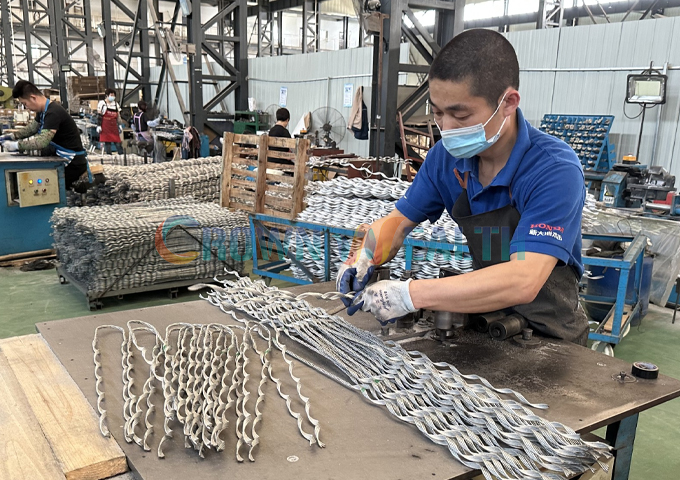
When you source guy grips for distribution, utility, telecommunications, fiber optic, or infrastructure projects, you need more than a product with the correct diameter.
You need stable manufacturing, consistent specifications, suitable materials, dependable quality control, and a supplier that understands how the product fits into the complete overhead line system.
Hbcrownwealth is a professional guy grip manufacturer and wholesaler in China.
We supply preformed guy grips and related pole line hardware for overseas:
- Distributors
- Wholesalers
- Power utility suppliers
- Telecommunications companies
- Infrastructure contractors
- Engineering projects
- OEM customers
You can choose standard specifications or send us your drawings and project requirements for customized production.
Because we also manufacture and supply other overhead line hardware, you can source compatible products together and simplify your supply chain.
Explore our complete Guy Grips product range or send us your wire diameter, cable type, required load, application, quantity, and project requirements.
Our team can help you identify a suitable solution for your project.
Frequently Asked Questions
What information do I need to order the correct guy grip?
You should provide the wire or cable type, outside diameter, required tensile or breaking strength, application, installation environment, quantity, and any applicable drawings or project standards. These details allow the manufacturer to match the grip more accurately.
How do I choose the correct guy grip size?
Start with the actual outside diameter of your wire or cable. Then check the manufacturer’s specified diameter range and confirm that the grip also meets your project’s mechanical requirements.
Can guy grips be customized?
Yes. Depending on the manufacturer and project, you can customize dimensions, length, materials, loop configuration, identification colors, packaging, and other specifications.
Can I use the same guy grip for different cable types?
You should not assume that you can. Even when two cables have similar diameters, their construction and mechanical requirements may differ. Always confirm compatibility with the manufacturer.
What should I check before placing a bulk guy grip order?
Check the approved specifications, sample, materials, dimensions, mechanical requirements, surface treatment, packaging, quantity, delivery requirements, and applicable inspection criteria before mass production.
Can I purchase guy grips together with other pole line hardware?
Yes. Purchasing compatible thimbles, stay rods, eye bolts, brackets, clamps, pole bands, and other hardware from one supplier can simplify specification matching, procurement, packaging, and shipping.
How can I find a reliable guy grip manufacturer in China?
Look for a manufacturer that can confirm technical specifications, provide multiple sizes, support customization, control product dimensions and quality, provide samples, support bulk production, and supply the related hardware required by your project.
Does Hbcrownwealth supply OEM and wholesale guy grips?
Yes. Hbcrownwealth supplies standard and customized guy grip products for overseas distributors, wholesalers, contractors, telecom customers, utilities, infrastructure projects, and OEM buyers.